Showing posts with label Curt Schilling. Show all posts

Monday, November 05, 2012

Rhode Island Suing Curt Schilling... HAHAHAHAHAHA!!!

Rhode Island's Economic Development Corporation (EDC) is suing Curt Schilling. The accusation is that Curt Schilling, along with former head of the EDC Keith Stokes (yes, the agency is suing its former head), knowingly concealed the fact that Schilling's video game company (38 Studios) would run out of money in 2012.

This is simply delightful. Curt Schilling can't get away from his transgressions.

If the EDC can prove that Schilling knew the company was running out of money (Schilling's intense lobbying for new investors, and the fact that the company ran out of money seem to support such a theory), and hid that information from the state, then he could be in lots of trouble. And he'd be on the hook for lots of money.

Schilling claims the lawsuit is politically motivated. No shit, Schilling! That's what happens when businesses get money from the Government. You can't involve politicians without things getting political. And actual Conservatives know that. That's why we don't like Governments and Corporations getting into bed together. Taxpayer money is used to help someone make a profit, and the company can't do business without political restrictions and conditions. It's not an ideal situation.

Schilling isn't a true Conservative, though. He just liked spouting the rhetoric, and feeling morally superior to others. Well, his morals are dubious at best. I think he's greedy, selfish, ego-maniacal, and unwilling to take any moral responsibility for this company's failure. He forgot his alleged Conservative principles when it became convenient and potentially profitable for him. And now that the state that helped his stupid company is out $100 million, all he can do is play the role of a misunderstood victim. Rhode Island is the victim (perhaps of their own stupidity for investing in a video game company), not Mr. Schilling. But Curt won't take moral responsibility for this.

Maybe the courts can make him take financial responsibility.

I only wish he'd have to pay back the $100 million to each Rhode Islander personally. That's $95.15 owed to each citizen of the Ocean State, along with an apology.

Thursday, October 18, 2012

Curt Schilling Blocked Me on Twitter

Yesterday I wrote an angry rant about hating Curt Schilling. I sent a Tweet to Mr. Schilling's account (@Gehrig38).


And shortly thereafter, Mr. Schilling's account had blocked mine.

Granted, I could have been more clever with that headline. Maybe make him think I'd written something defending him. Maybe I could have been vague and said "A blog post about 38Studios." That might have been a sounder strategy because I don't think he even read what I sent him.

Then again, I didn't want to be deceptive or evasive. That would have been Schillingesque of me.

Regardless, it's just another example of Curt "Bob and Weave" Schilling avoiding tough questions. He made a career of having a big mouth and calling other athletes out. Then he screws up and can't address what he did, or why he did it. Except to WEEI's Dennis and Callahan who each had to ice their jaws after so much ball-washing.

I know this is old news, but that's what pisses me off. We obsessively rage at something for 72 hours, then move on to something else. And in this case, the rage should have lasted until Schilling showed genuine contrition instead of blaming the Rhode Island Governor.

We forgot about how much of a hypocritical jerk Schilling was. He hid, we moved on, and he's escaped the humiliation and humbling that his actions deserved. Curt Schilling is a coward.

Wednesday, October 17, 2012

I Still Hate You, Curt Schilling


Hearing Curt Schilling's voice on ESPN sent me into a cataclysmic rage. This fraud, this failure, still gets paid to watch baseball games and then talk about it. And in this society, which rages at something for 72 hours then forgets about it, we're fine with that.

Remember #Kony? How big was that on social media? Who cares about that now?

Of course, Curt Schilling is not a murderous dictator in Africa. But he's still an asshole. He still ran a business with government money from the state of Rhode Island, and it failed. He was a fake Conservative who enjoyed speaking the rhetoric but didn't want to practice it. He makes actual Conservatives like me look bad with his stupidity.

I don't want to talk politics, I want to talk Schilling.

Here's another thing that pisses me off about Curt. The only media he opened up to were Dennis & Callahan. I wonder what Schilling would say if a hitter only faced softball pitchers, and never faced anyone who would give them a tough pitch. Schilling didn't have the balls to face someone from the Globe, or (God forbid) a Rhode Island news outlet.

He was able to take money from Rhode Island, just not able to take questions from them.

I loved Curt Schilling as a baseball player, but as a man, I have no respect for him whatsoever. He's a fake, a hypocrite, a remorseless vulture who doesn't feel bad for the money that Rhode Island citizens have to pay to fund his stupid video game company.

Wednesday, September 26, 2012

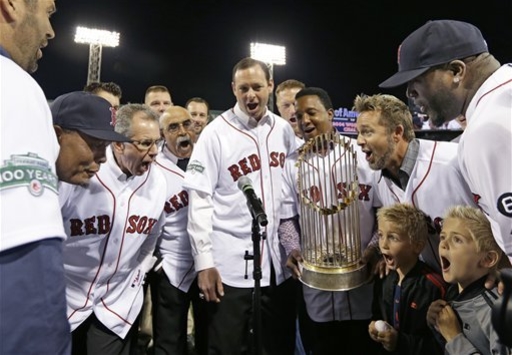
Comparing the 2004 and 2012 Red Sox

Last night the 2004 World Series winning Red Sox team was honored at Fenway Park. For some reason, the Sox chose to commemorate the 8th anniversary of this event. Whatever. Must sell tickets. Must continue streak.

Compare the 2004 and 2012 Red Sox and the differences are extreme, top to bottom, on the field, in the clubhouse, inside the Front Office.

The pitching was better in 2004. They had two potential Hall of Famers in Pedro Martinez and Curt Schilling. Then solidity after that with Wakefield, Lowe, and Arroyo. 933 combined career wins from those five guys.

The hitting was also better. Assisted by PEDs, David Ortiz and Manny Ramirez were the best 3-4 combo since Ruth/Gehrig. The Sox led the AL in runs, OBP, and SLG. The 2012 Sox offense is inconsistent, 4th in runs, 7th in OBP, 6th in SLG.

The 2004 Sox had a better attitude. The players were laid-back. They had a Manager that allowed that easygoing attitude. Kevin Millar, Johnny Damon, Manny Ramirez, and David Ortiz were entertaining characters. Quieter guys like Bill Mueller and Derek Lowe seemed to enjoy the Millar/Manny sideshows drawing all the attention.

The Manager also balanced a pair of prima donnas (Pedro and Schilling). Both of them remained focused on the same goal: winning. Terry Francona got the most out of those two just like General Eisenhower got the most out of Patton and Montgomery in World War II. Francona kept everything low key.

In 2012, Bobby Valentine goes out of his way to keep players on edge. He criticizes them in the media, and he doesn't move on and let things go.

The GM is different too. In 2004, Theo Epstein had the balls and the authority to trade Nomar. Could you imagine, in a pennant race, Ben Cherington being allowed to trade a star player?

Players, managers, and GMs change. But the ownership is still the same. Or is it?

In 2004 the owners owned just the Red Sox. They had no other concerns. And their only goal was to win the World Series, at all costs.

Now they own a struggling soccer team in Liverpool. And the aims of the Red Sox is scattered and out of order. It's tough to figure out which objectives are the most important for them. They have to sell tickets, use the media to besmirch ex-players, lie about sellout streaks, market the ballpark, overspend on free agents, and somewhere in this mess of priorities is trying to win ballgames.

In 2004, the Red Sox were John Henry's biggest concern, his main focus. Now, when the '04 Sox are honored at Fenway, the owners aren't even present.

The Sox were once Fenway Sports Group's entire empire. Now they're just a colony, and Larry Lucchino is the Imperial Governor, appointed by King John to run day-to-day operations.

But Larry Lucchino hasn't run the Sox, he's ruined them.

The way ownership operate this team is the biggest difference between 2004 and 2012.

Photo Credit:
AP Photo

Friday, June 22, 2012

No Pity for Curt Schilling


Curt Schilling had been uncharacteristically quiet after the demise of 38 Studios, even taking a leave of absence from appearing on ESPN's Baseball Tonight. This morning, he decided to give his side of the story.

Of course, he did so with two people who are big admirers of his. I'd even go so far as to call WEEI's Dennis & Callahan shills for Curt Schilling.

I do have to give Dennis & Callahan credit. Their knees must be scraped, their jaws sore, and their tongues dry after washing Curt Schilling's balls for over an hour. They really worked their mouths off this morning.

And give credit to Curt Schilling for being willing to take on members of the media who would ask him tough questions such as "You didn't walk away with anything, did you?" or "How much of your own money did you lose?" or "Did the comment about solvency change the landscape?"

These weren't softball questions. It was tee-ball.

When asked why his video game company failed, Schilling blamed a "lack of capital." In other words, not enough people were investing in it. Schilling then blamed Rhode Island Governor Lincoln Chaffee for scaring off an investor that would have helped keep the company afloat with a $35 million investment.

But if the company wasn't making sufficient money on its own and was supported by a combination of private investments and public tax credits, then there was something already wrong with the company.

Imagine if a restaurant is struggling to pay its bills. It looks for investors, but nobody wants to buy into it. Then it shuts down. The cause of death isn't lack of capital, it's lack of sufficient profit. The capital could have staved off death, but a lack of it didn't cause death.

Schilling refused to admit this. And Dennis & Callahan refused to call him on it. They still love Curt in the Car.

Schilling claims he lost about $50 million investing in this company, and is now "tapped-out." I feel no sympathy for him. Only an idiot would risk everything he had on a business without putting a little bit away. He's made his bed.

Schilling accused Governor Chaffee of deliberately undermining the venture by making public remarks about the company's solvency and ability to pay bills. But the Governor spoke the truth. 38 Studios was dependent on tax credits and needed more capital just to survive.

And when you get involved with Government funds, you have to deal with the Government. That's the deal you make when you deal with the Government.

And that's why conservatives who have a brain don't like Government programs such as the one Schilling took advantage of. They don't help businesses that much, and any potentially successful business should be able to attract private investment based on its own merits. If a business needs Government money to survive, it's much less likely to be a successful one.

Schilling feels as though he fell prey to a politician's agenda. But he put himself in that position. The Government and the Mafia are the same (that's not a joke abour Rhode Island). You ask them for a favor, and then you're in their pocket.

Speaking of politics, Dennis & Callahan asked this hard-hitting question:

"Did you know that loan guarantees were just for liberals?"

Schilling responded with "I'm not sure where my stance and opinion in that we need a smaller government, I don't know how that correlates to this."

How does advocating for less Government spending correlate with taking advantage of Government spending? Does he really not see the connection?

Schilling argued that he just took advantage of an opportunity. And if he didn't take the tax credit offer, it would have just gone to waste. Nobody else had applied for it.

As an actual conservative, this logic pisses me off. I'd probably take some Government cash if it were offered to me, but if I were starting a business, I'd try to avoid getting involved with the Government. Especially if it were a high profile business. Government money is conditional money, and that money is controlled by politicians who are very conditional people.

Actual conservatives know this. But Schilling is just a loudmouth, opinionated collection of uneducated thoughts.

Schilling did say that he is mostly responsible for the failure of 38 Studios. But that statement was always qualified. As I mentioned earlier, he blamed Governor Chaffee for scaring an investor away. He blamed lack of capital for the company's downfall. He blamed people with an "agenda" for initiating that downfall.

Maybe it was just a poorly managed company. They sold a decent amount of their first game (Kingdoms of Amalur: Reckoning), but EA got a sizable chunk of the money from that. And their business model seems antiquated, very cartridge-era for a gaming company. They sold copies of their game to people. Very basic. Too basic. So many games are available for free out there. Then companies make money off subscriptions, or sell stuff in the game that opens new levels or characters or weapons. And then that way the keep spending as they're playing.

And Schilling admittedly spent very freely. He created an impressive office, and paid his young employees $86,000 plus full benefits.

That's one thing true conservatives hate about Government funded companies. So long as the money is flowing, the company spends freely. It doesn't seem like Schilling ever asked "could I get a programmer 90% as good for 50% the pay?" It doesn't seem like he was worried with spending at all.

Baseball has no salary cap and neither did Schilling.

He tried very hard in the interview to sound like he knew what he was talking about. He injected business-speak jargon at every opportunity. "Senior position of debt," "Transient companies," "Payables," "A staff ramp," "A neutral burn," "domiciled."

He even said "things" when referring to Government programs, then corrected himself with the word "mechanisms."

He explained what this jargon meant as he went along. But the point of jargon is to be understood by fellow speakers of the language. If you have to explain it, you shouldn't use it.

Just say "First to get paid back" instead of "Senior position of debt." Say "located" instead of "domiciled."

Curt Schilling wanted to sound like he knows what he's talking about. But it seemed like he'd taken a 30 minute course on how to sound like a businessman, and that's it.

Throughout the interview, Schilling never apologized to the people of Rhode Island who paid for his failure. He frequently mentioned his own family's troubles, usually at the prodding of Dennis & Callahan.

A caller stated to him that she would never try to do business in Rhode Island because the politicians make it so difficult.

"That would have been good advice three years ago, hun," Schilling quipped. He then became serious and almost sincere "I also understand the anger. The anger, though... it's as much about... the misinformation that people believe to be true than about the actual facts that happened."

So there you have it. Curt Schilling is blameless for what he did. The anti-Government spending, so-called conservative who took advantage of government spending, is merely a victim of misinformation and political agendas. The spending on facilities, the high salaries, and the mediocre products weren't to blame for 38 Studios' downfall, it was a lack of investment and a politician scaring investors away.

With all this complaining, all this passing the buck, Schilling would fit in nicely with the 2011 Red Sox.

Friday, May 25, 2012

The Death of 38 Studios


It appears to be Game Over for Curt Schilling's video game company. 38 Studios sent a company wide email to its employees:

"The Company is experiencing an economic downturn. To avoid further losses and possibility of retrenchment, the Company has decided that a company wide lay off is absolutely necessary.

"These layoffs are non-voluntary and non-disciplinary.

"This is your official notice of lay off, effective today, Thursday, May 24th, 2012."


Now that's not the same as bankruptcy. It's actually worse. A bankrupt company still intends to do business after sorting out its debts. This looks like the factory is shutting down completely. I'm sure 38 Studios will sell whatever assets it has, such as the multiplayer game it's been developing. They can't develop it further as no developers work for them any more. After that, the company is, essentially, dead.

Schilling received criticism for being a political Conservative that railed against government assistance programs, then accepting a $75 million loan from the state of Rhode Island for his video game company.

I don't like government programs like this. The intention was to lend money to companies so they'd do business in RI. But they gave a huge chunk of the money to Schilling's company, violating rule #1 of investing: Diversify. And what do governments know about lending money to businesses?

It's one thing to lure successful companies with tax breaks. It's another to give money to companies that may or may not be successful. And if they can't get funding from the private sector, there's probably not much potential for profit.

In some respects, Schilling is a hypocrite. If he's criticized people who have received government assistance, he became a hypocrite the moment he agreed to this deal. Then again, there's a slight difference if he's only criticized the government for doing it. I can't blame anyone who takes advantage of government help. I would. I hate most of these programs, but if somebody sent me a check once a month, I'd cash it. Wouldn't anyone?

I have no problem with the people who use such programs, my beef is with the programs themselves. And if Schilling only criticized the programs and politicians, not the people benefiting, then he's not a hypocrite. It's un-American to turn down free money.

Anyway, I'm really glad Curt Schilling never ran for office in Massachusetts. He's not that bright. I kind of feel bad that this isn't working out for him. Then I feel worse for the people of Rhode Island who have to pay for it not to work out. Schilling has claimed that he put $30 million of his own money into this. But it's his project, his toy, his venture. Rhode Island's politicians were dumb, and now their people have to pay for it. 1,051,302 people live in Rhodey. That's $71.34 per person.

That's enough to buy a video game.

Thursday, March 13, 2008

RED SOX 2008 PREVIEW: STARTING PITCHERS

The most important position is starting pitcher. Those clowns who claim that a pitcher shouldn't be eligible to win MVP because hey don't play every day have a fundamental comprehension problem when it comes to the game of baseball. Pitching isn't everything, but on the list of the top 5 most important things in baseball, it's numbers 1, 2, 3, and 4.

The Red Sox allowed the fewest runs in baseball last year, a poultry 4.1 per game. In the playoffs, the Sox allowed 3.3 runs per game. And that's why they won it all. It wasn't Ellsbury's "excitement" or David Ortiz's "clutchness" or even Mike Lowell's stability. It was good, solid pitching.

Starting pitching is also the biggest reason why the Red Sox bullpen was statistically the best in baseball. The bullpen wasn't deep last year. Apart from Papelbon, Okajima, and Timlin; it was a crapshoot. But with good starters going deep into games, mediocre arms like Javier Lopez's were kept relatively unexposed.

This year's rotation has more question marks than Matthew Lesko's jacket.



Who will be the #5 starter? What will the Sox get from Colon? When will Schilling return and what will he give the team? How will Daisuke pitch now that he's had a year to adjust to America? How will young guys like Lester and Bucholz perform? How will Wakefield's back hold up? And the latest question: When will Beckett be ready to go?

Despite the recent back spasms, Beckett is the most reliable and undoubtedly the best pitcher in the rotation. he's an Ace, a bona fide Ace. He was the only 20 game winner in the Majors in '07, was 6th in the AL in ERA at 3.27, was 7th in strikeouts with 194, was 6th in WHIP at 1.14, and should have won the Cy Young.

His post-season numbers were even more impressive. In 4 starts, he went 4-0 with 30 innings (7.5 per start), 4 earned runs (1.20 ERA), 19 hits, 2 walks (0.70 WHIP, which is absurd), and 35 strikeouts (10.5 K per 9 IP). Just to put things in perspective, Erik Bedard led the AL in strikeout to walk ratio with 10.93 to 1. Beckett's K/BB ratio in the post-season was 17.5 to 1.


Last year he did a good job of becoming a complete pitcher instead of just a hard thrower. He kept his walks down (only 40, compared to 74 BBs in '06), and kept the ball inside the park (17 HRs in '07 compared to 36 the year before). He turns 28 in May and is in the prime of his career. Look for more of the same from Beckett in 2008.

Then things get a little messy. Who is the #2 starter? Well, with Beckett out, Schilling out, Matsuzaka expecting a baby and Colon still doing bullpen sessions; it will probably be Lester or Wakefield who gets the ball for the 2nd game of the year. But that should change.

The fact of the matter is that the Red Sox don't have a #2 starter, at least not at the moment.

The Sox hope that Daisuke Matsuzaka steps up into the role of #2 man on the rotation. Dice-K was a bit of a disappointment last year, but that was mainly due to the incessant hyping he received before the year began.

In his "rookie" season, Matsuzaka appeared on several different statistical leader boards. He was 9th in the AL in hits allowed per 9 innings with 8.40. He was 6th in strikeouts per 9 innings with 8.84. He was 9th in homeruns allowed with 25. He was 6th in walks allowed with 80. He was 6th in strikeouts with 201. He was 4th in hit batters with 13. He was 6th in earned runs allowed with 100.

When Daisuke was in Japan, he was so much better than the hitters over there, that he could simply toy with them. He could fall behind in the count, waste multiple pitches, and dance around the plate. He could then challenge hitters over there and almost always came out the victor.


But Major League hitters are on a much higher level. They take pitches, they know the strike zone. They're fearless. They crush mistakes about 95% of the time. They're exhausting to face. They work the count and understand how important the count is.

One major difference between Nippon Professional Baseball League and the Majors is that in Japan, the more pitches a hitter sees in an at-bat, the more lost he becomes. But in America, the more pitches a hitter sees in an at-bat, the more tuned in he becomes. Daisuke averaged 3.98 pitches per plate appearance last year, and 17.0 pitches per inning. There's no denying his arm strength to do this, but when you show Major League hitters that much, they will figure you out.

In order to become a good Major League pitcher, Daisuke will have to do something similar to what Beckett did. Instead of relying purely on natural talent, he will have to become a pitcher. He'll have to understand the dynamics of the count, understand the psychology of a Major League hitter. He'll have to throw first pitch strikes. He'll have to be able to throw strikes without challenging hitters. He has the ability to do all of this. But it's up to him, pitching coach John Farrell, and Jason Varitek to help him get this done.

If he doesn't become more of a pitcher, expect more mediocrity and inconsistency in 2008. But if he learns from last year and straightens himself out, he will become a force.

I think he'll improve on his performance and by the end of the season settle into the #2 spot. I see a 17 win season with an ERA in the 3.75 to 3.95 range. Good, but not great.

And things get even more messy...

Like Daisuke, Tim Wakefield was a member of the not-so-prestigious 100 earned run club in 2007. Don't let the 17 wins fool you, Wakefield had a dreadfully average year in 2007. His ERA of 4.76 was just above the league average of 4.74. He allowed 22 homeruns and walked 64 batters. His WHIP of 1.349 was, in a word, unimpressive. And now his age becomes a question. Wakefield was unable to play in the World Series last year, and he turns 42 in August.
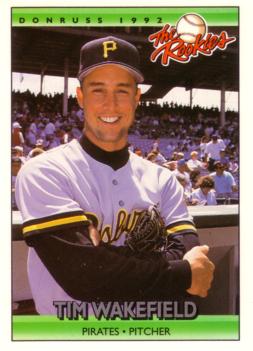


Wakefield benefited from being in the same division as the Devil Rays. He went 4-1 against Tampa. He also loves pitching in domes. He went 3-2 against Toronto. In domed stadiums, he was 4-1 with a 1.69 ERA. Perhaps the Sox should look into building a dome over Fenway after all.

Looking at Wakefield's numbers, a trend becomes apparent. He was great for the first few innings, then was beaten up, usually around the 4th or 5th. He started 31 games in '07, and failed to go 5 innings in 4 of them. He failed to go 7 innings in 19 starts. He'd go 3 or 4 strong innings, start to falter in the 5th, then collapse in the 6th or 7th.

Here is a glimpse at opposing hitters' performance based on Wakefield's pitch count:

From pitches 1 to 45, opponents were 77 for 345, which is a .223 average. From pitches 46 to 75, hitters were 71 for 226, which is a .314 average. Wakefield only averaged 93.2 pitches per start, his lowest total since 1999, and 2nd lowest in his career. This was due to his inability to pitch well after passing 45 pitches.

The problem with Wakefield isn't just that he tires out and loses his edge after 45 pitches. The main problem is that he has one pitch. Once he goes through the lineup once, hitters will adjust to that one pitch. At first, it causes problems for them, as illustrated by their .223 average early in games. But once they see it, they figure it out, and Wakefield is doomed.

Considering his age, his numbers, and the type of pitcher he is; I think Wakefield would be perfect for the bullpen. The knuckleball would be the ultimate change of pace if Wake came in after a guy like Beckett and before a guy like Papelbon. But at the moment, he might be the Opening Day starter.

Once everyone comes back to the rotation, I think Wakefield will be moved to the pen. I don't see it as a demotion, although it is. To me, moving him out there would be an attempt to better utilize his strengths, while minimizing the effect his weaknesses.

Then there's Curt Schilling. The Red Sox gave Schilling a 1 year deal, then shortly after he was down with shoulder problems. There's no word yet on when he will return, or how effective he will be when and if he does.

Last year injuries hampered Schilling and reduced his starts as well. He went 9-8 in 24 starts, threw 151 innings, and had an ERA of 3.87. But he shined in the post-season, going 3-0 in 4 starts with an ERA of 3.00.

Despite being 41 years old, Schilling is still valuable to this team. I don't think he'll do much to contribute during the regular season, maybe make 16 starts, throw about 100 innings, and that's it. Schilling's real value is in the playoffs. He just knows how to step it up in October. His 11-2 post-season record and 2.23 ERA in 19 innings speak for itself.

But there is a definite possibility that Schilling won't pitch AT ALL in 2008. The debacle over his shoulder had doctors debating whether or not to perform surgery or just rehab it. Schilling is the biggest question mark on the Red Sox, which is saying quite a bit.

Jon Lester showed signs of improvement in 2007. The knock on him has always been how often he finds himself in jams. He's usually able to navigate through them without much trouble, but his pitch count piles up and he has to leave the game earlier than you'd like a starter to leave.

But all of his numbers made slight improvements last year. His ERA went from 4.76 in 2006 to 4.57. He struck out batters more often, and walked batters less often. His WHIP dropped from 1.65 to 1.46. Opponents went from hitting .294 off him to hitting .257. He went from averaging 5.42 innings per start to 5.55. In '06, he threw 4.11 pitches per batter, but that number dropped to 3.95 in '07. In '06, he averaged 18.6 pitches per inning compared to 17.2 last year.

That 17.2 pitches per inning is still on the high side. With that average, a pitcher reaches 100 pitches at 5.8 innings. But, if the improvement he showed last year continues into 2008, he might be able to get that number down to 16 pitches per inning (100 pitches in 6.25 innings), or 15 per inning (6.67 innings). If he can do that, and maintain a steady ERA below 4.50, he'll be a real asset at the bottom of the rotation.

I think Lester will have a solid year. I see 30 starts for him, 15 wins, and an ERA around 4.30.

Then there's Bartolo Colon. Despite good reports from his bullpen sessions, I'm still skeptical. I still think it was a good acquisition. The Sox can't lose. But the 250 lb. righty has only made 28 starts the past two years. And when he has started, he's been ineffective. Last year his ERA was 6.34 with a WHIP of 1.62. That's just not good enough, not even for a #5 starter. In my opinion, the Red Sox won't get more than 8 starts from Colon, and his ERA will be as bloated as his midsection.


Clay Buchholz went from prospect to hero with his no-hitter on September 1st last year. But concerns over his development prompted the Sox to shut him down for the post-season.

Buchholz made 4 appearances last year for Boston: 3 starts and 1 relief outing. Apart from his no-hitter, and the 3 innings of shutout relief (both against lowly Baltimore), he wasn't too impressive. He had a decent 6 inning, 3 earned run start against the Angels which he won. His last start was a 4.2 inning effort against the Blue Jays, in which he received the loss.

Buchholz wasn't stellar in AAA Pawtucket either. In 8 starts, he went 1-3 with a 3.95 ERA.

He'll most likely start the season on the 25 man roster, maybe even in the rotation. Schilling and Colon are still a long ways off from starting games, Beckett's back spasms will force him to miss a start or two, which leaves space for Buchholz. But he really belongs in AAA Pawtucket once the rotation comes to order. After all, he's only 23.

A slim possibility for a starting pitcher is Julian Tavarez. The Dominican Dandy made 23 starts for the Sox last year, and actually had a decent stretch in May and June. But by and large, he was below average. As a starter he was 6-11 with a 5.22 ERA. Opponents hit .281 off him.

One odd stat with Tavarez that really has no explanation is the amount of unearned runs he allowed. Onbiously better pitchers like Beckett will be able to pitch around defensive miscues better than Tavarez, but the Red Sox as a team allowed 39 unearned runs in 2007. 12 of those came with Tavarez on the mound. No other pitcher had more than 6. Maybe Julian needs to do a better job as defensive coordinator when he's on the field.


An even slimmer possibility at starting pitcher is Kyle Snyder. Snyder is capable of starting, but his best place is in the bullpen. He was a decent long-reliever last year, and as a starter, he pretty much sucks. Think about it, he wasn't good enough to be in Kansas City's rotation. In the last three years, Snyder has made 14 starts. In those starts, he's 3-8 with an 8.51 ERA.

Kyle will remain in the bullpen, where he is solid in relief and on drums.


The Red Sox rotation will start the season jumbled and confused. With 2 games in Japan, then more exhibition contests before a 2 game series in Oakland, the Red Sox can use the same 2 starters in the first 4 games.

It will take some time for the rotation to settle, what with all the injuries, and fat old men. But when the dust finally clears, I think it will look something like this:

1. Josh Beckett
2. Daisuke Matsuzaka
3. Curt Schilling
4. Jon Lester
5. Tim Wakefield

Sources:
Baseball-Reference.com
ESPN
The Baseball Cube

Thursday, February 07, 2008

SCHILLING'S SCHITTY SCHOULDER SCHTARTING SCHPRING SCHTRIFE


Both the Globe and Herald are breaking stories about Curt Schilling's right shoulder. The variations between the two stories leads me to believe that this story is extremely tentative and speculative. Here are a few things that are clear, though:

Curt Schilling's right shoulder is acting up

He will miss at least the start of spring training

He went to see Dr. Craig Morgan, who performed shoulder surgery on Schilling in 1995

The Red Sox official stance is "no comment"

Curt missed 7 weeks of last season with problems in his right shoulder

He's 41 years old

Tony Massarotti is a sensationalist writer

The Globe's story is more subdued, stating that there are reports of an injury and that Schilling may miss part of spring training. The Herald's story is more doom and gloom. The title of the piece is "Schilling could be lost for season." Of course, there's no hard evidence to support this. If Schilling's injury is bad enough to require surgery (again, we have no idea how bad it is), it's safe to say his season is done. But we don't even know what the injury actually is.

Massarotti's Herald column also asserts that there is friction and/or tension between the Red Sox and Schilling. Apparently, there is disagreement over treatment options. There is also a possibility that the Red Sox have looked into voiding Schilling's contract.

Tony Maz cites "baseball sources." He's a reliable reporter, but I think this story is an extreme interpretation of rumor and second hand talk. Understandable considering the lack of spring training storylines surrounding the Sox.

It is possible that the Red Sox and Schilling cannot come to a consensus on how to treat the shoulder. It's possible Schilling wants to rehab somewhere but the team wants him to rehab in Fort Myers. Who knows?

And as far as the Red Sox taking steps to void the contract: all that means is that the Red Sox have looked into it. If you had a 41 year old pitcher with a shoulder injury, and you were on the line to pay him $8M, wouldn't you see if you could get out of it?

What really irks me about this whole thing is that Johan Santana is currently trying on his new Mets apparel. The Red Sox could have had him, albeit for a price. We had Beckett, then a 41 year old, overweight, bad shoulder question mark. Then whatever the Japanese symbol for a question mark is. Then a 90 year old knuckle-baller with a bad back. Then a bunch of kids with next to no Major League experience. Santana wouldn't be a question mark. He would've been an exclamation point.

Sources:
Boston.com
article by Gordon Edes and Nick Cafardo
BostonHerald.com
article by Tony Massarotti

Photo Credit:
Associated Press