Thursday, March 13, 2008

RED SOX 2008 PREVIEW: STARTING PITCHERS

The most important position is starting pitcher. Those clowns who claim that a pitcher shouldn't be eligible to win MVP because hey don't play every day have a fundamental comprehension problem when it comes to the game of baseball. Pitching isn't everything, but on the list of the top 5 most important things in baseball, it's numbers 1, 2, 3, and 4.

The Red Sox allowed the fewest runs in baseball last year, a poultry 4.1 per game. In the playoffs, the Sox allowed 3.3 runs per game. And that's why they won it all. It wasn't Ellsbury's "excitement" or David Ortiz's "clutchness" or even Mike Lowell's stability. It was good, solid pitching.

Starting pitching is also the biggest reason why the Red Sox bullpen was statistically the best in baseball. The bullpen wasn't deep last year. Apart from Papelbon, Okajima, and Timlin; it was a crapshoot. But with good starters going deep into games, mediocre arms like Javier Lopez's were kept relatively unexposed.

This year's rotation has more question marks than Matthew Lesko's jacket.
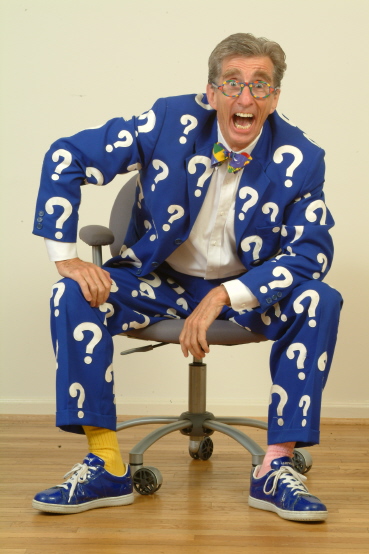


Who will be the #5 starter? What will the Sox get from Colon? When will Schilling return and what will he give the team? How will Daisuke pitch now that he's had a year to adjust to America? How will young guys like Lester and Bucholz perform? How will Wakefield's back hold up? And the latest question: When will Beckett be ready to go?

Despite the recent back spasms, Beckett is the most reliable and undoubtedly the best pitcher in the rotation. he's an Ace, a bona fide Ace. He was the only 20 game winner in the Majors in '07, was 6th in the AL in ERA at 3.27, was 7th in strikeouts with 194, was 6th in WHIP at 1.14, and should have won the Cy Young.

His post-season numbers were even more impressive. In 4 starts, he went 4-0 with 30 innings (7.5 per start), 4 earned runs (1.20 ERA), 19 hits, 2 walks (0.70 WHIP, which is absurd), and 35 strikeouts (10.5 K per 9 IP). Just to put things in perspective, Erik Bedard led the AL in strikeout to walk ratio with 10.93 to 1. Beckett's K/BB ratio in the post-season was 17.5 to 1.


Last year he did a good job of becoming a complete pitcher instead of just a hard thrower. He kept his walks down (only 40, compared to 74 BBs in '06), and kept the ball inside the park (17 HRs in '07 compared to 36 the year before). He turns 28 in May and is in the prime of his career. Look for more of the same from Beckett in 2008.

Then things get a little messy. Who is the #2 starter? Well, with Beckett out, Schilling out, Matsuzaka expecting a baby and Colon still doing bullpen sessions; it will probably be Lester or Wakefield who gets the ball for the 2nd game of the year. But that should change.

The fact of the matter is that the Red Sox don't have a #2 starter, at least not at the moment.

The Sox hope that Daisuke Matsuzaka steps up into the role of #2 man on the rotation. Dice-K was a bit of a disappointment last year, but that was mainly due to the incessant hyping he received before the year began.

In his "rookie" season, Matsuzaka appeared on several different statistical leader boards. He was 9th in the AL in hits allowed per 9 innings with 8.40. He was 6th in strikeouts per 9 innings with 8.84. He was 9th in homeruns allowed with 25. He was 6th in walks allowed with 80. He was 6th in strikeouts with 201. He was 4th in hit batters with 13. He was 6th in earned runs allowed with 100.

When Daisuke was in Japan, he was so much better than the hitters over there, that he could simply toy with them. He could fall behind in the count, waste multiple pitches, and dance around the plate. He could then challenge hitters over there and almost always came out the victor.


But Major League hitters are on a much higher level. They take pitches, they know the strike zone. They're fearless. They crush mistakes about 95% of the time. They're exhausting to face. They work the count and understand how important the count is.

One major difference between Nippon Professional Baseball League and the Majors is that in Japan, the more pitches a hitter sees in an at-bat, the more lost he becomes. But in America, the more pitches a hitter sees in an at-bat, the more tuned in he becomes. Daisuke averaged 3.98 pitches per plate appearance last year, and 17.0 pitches per inning. There's no denying his arm strength to do this, but when you show Major League hitters that much, they will figure you out.

In order to become a good Major League pitcher, Daisuke will have to do something similar to what Beckett did. Instead of relying purely on natural talent, he will have to become a pitcher. He'll have to understand the dynamics of the count, understand the psychology of a Major League hitter. He'll have to throw first pitch strikes. He'll have to be able to throw strikes without challenging hitters. He has the ability to do all of this. But it's up to him, pitching coach John Farrell, and Jason Varitek to help him get this done.

If he doesn't become more of a pitcher, expect more mediocrity and inconsistency in 2008. But if he learns from last year and straightens himself out, he will become a force.

I think he'll improve on his performance and by the end of the season settle into the #2 spot. I see a 17 win season with an ERA in the 3.75 to 3.95 range. Good, but not great.

And things get even more messy...

Like Daisuke, Tim Wakefield was a member of the not-so-prestigious 100 earned run club in 2007. Don't let the 17 wins fool you, Wakefield had a dreadfully average year in 2007. His ERA of 4.76 was just above the league average of 4.74. He allowed 22 homeruns and walked 64 batters. His WHIP of 1.349 was, in a word, unimpressive. And now his age becomes a question. Wakefield was unable to play in the World Series last year, and he turns 42 in August.
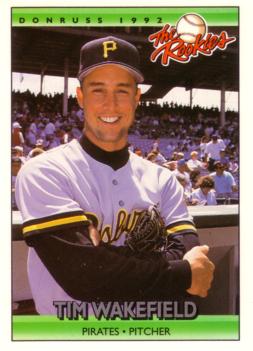


Wakefield benefited from being in the same division as the Devil Rays. He went 4-1 against Tampa. He also loves pitching in domes. He went 3-2 against Toronto. In domed stadiums, he was 4-1 with a 1.69 ERA. Perhaps the Sox should look into building a dome over Fenway after all.

Looking at Wakefield's numbers, a trend becomes apparent. He was great for the first few innings, then was beaten up, usually around the 4th or 5th. He started 31 games in '07, and failed to go 5 innings in 4 of them. He failed to go 7 innings in 19 starts. He'd go 3 or 4 strong innings, start to falter in the 5th, then collapse in the 6th or 7th.

Here is a glimpse at opposing hitters' performance based on Wakefield's pitch count:

From pitches 1 to 45, opponents were 77 for 345, which is a .223 average. From pitches 46 to 75, hitters were 71 for 226, which is a .314 average. Wakefield only averaged 93.2 pitches per start, his lowest total since 1999, and 2nd lowest in his career. This was due to his inability to pitch well after passing 45 pitches.

The problem with Wakefield isn't just that he tires out and loses his edge after 45 pitches. The main problem is that he has one pitch. Once he goes through the lineup once, hitters will adjust to that one pitch. At first, it causes problems for them, as illustrated by their .223 average early in games. But once they see it, they figure it out, and Wakefield is doomed.

Considering his age, his numbers, and the type of pitcher he is; I think Wakefield would be perfect for the bullpen. The knuckleball would be the ultimate change of pace if Wake came in after a guy like Beckett and before a guy like Papelbon. But at the moment, he might be the Opening Day starter.

Once everyone comes back to the rotation, I think Wakefield will be moved to the pen. I don't see it as a demotion, although it is. To me, moving him out there would be an attempt to better utilize his strengths, while minimizing the effect his weaknesses.

Then there's Curt Schilling. The Red Sox gave Schilling a 1 year deal, then shortly after he was down with shoulder problems. There's no word yet on when he will return, or how effective he will be when and if he does.

Last year injuries hampered Schilling and reduced his starts as well. He went 9-8 in 24 starts, threw 151 innings, and had an ERA of 3.87. But he shined in the post-season, going 3-0 in 4 starts with an ERA of 3.00.

Despite being 41 years old, Schilling is still valuable to this team. I don't think he'll do much to contribute during the regular season, maybe make 16 starts, throw about 100 innings, and that's it. Schilling's real value is in the playoffs. He just knows how to step it up in October. His 11-2 post-season record and 2.23 ERA in 19 innings speak for itself.

But there is a definite possibility that Schilling won't pitch AT ALL in 2008. The debacle over his shoulder had doctors debating whether or not to perform surgery or just rehab it. Schilling is the biggest question mark on the Red Sox, which is saying quite a bit.

Jon Lester showed signs of improvement in 2007. The knock on him has always been how often he finds himself in jams. He's usually able to navigate through them without much trouble, but his pitch count piles up and he has to leave the game earlier than you'd like a starter to leave.

But all of his numbers made slight improvements last year. His ERA went from 4.76 in 2006 to 4.57. He struck out batters more often, and walked batters less often. His WHIP dropped from 1.65 to 1.46. Opponents went from hitting .294 off him to hitting .257. He went from averaging 5.42 innings per start to 5.55. In '06, he threw 4.11 pitches per batter, but that number dropped to 3.95 in '07. In '06, he averaged 18.6 pitches per inning compared to 17.2 last year.

That 17.2 pitches per inning is still on the high side. With that average, a pitcher reaches 100 pitches at 5.8 innings. But, if the improvement he showed last year continues into 2008, he might be able to get that number down to 16 pitches per inning (100 pitches in 6.25 innings), or 15 per inning (6.67 innings). If he can do that, and maintain a steady ERA below 4.50, he'll be a real asset at the bottom of the rotation.

I think Lester will have a solid year. I see 30 starts for him, 15 wins, and an ERA around 4.30.

Then there's Bartolo Colon. Despite good reports from his bullpen sessions, I'm still skeptical. I still think it was a good acquisition. The Sox can't lose. But the 250 lb. righty has only made 28 starts the past two years. And when he has started, he's been ineffective. Last year his ERA was 6.34 with a WHIP of 1.62. That's just not good enough, not even for a #5 starter. In my opinion, the Red Sox won't get more than 8 starts from Colon, and his ERA will be as bloated as his midsection.


Clay Buchholz went from prospect to hero with his no-hitter on September 1st last year. But concerns over his development prompted the Sox to shut him down for the post-season.

Buchholz made 4 appearances last year for Boston: 3 starts and 1 relief outing. Apart from his no-hitter, and the 3 innings of shutout relief (both against lowly Baltimore), he wasn't too impressive. He had a decent 6 inning, 3 earned run start against the Angels which he won. His last start was a 4.2 inning effort against the Blue Jays, in which he received the loss.

Buchholz wasn't stellar in AAA Pawtucket either. In 8 starts, he went 1-3 with a 3.95 ERA.

He'll most likely start the season on the 25 man roster, maybe even in the rotation. Schilling and Colon are still a long ways off from starting games, Beckett's back spasms will force him to miss a start or two, which leaves space for Buchholz. But he really belongs in AAA Pawtucket once the rotation comes to order. After all, he's only 23.

A slim possibility for a starting pitcher is Julian Tavarez. The Dominican Dandy made 23 starts for the Sox last year, and actually had a decent stretch in May and June. But by and large, he was below average. As a starter he was 6-11 with a 5.22 ERA. Opponents hit .281 off him.

One odd stat with Tavarez that really has no explanation is the amount of unearned runs he allowed. Onbiously better pitchers like Beckett will be able to pitch around defensive miscues better than Tavarez, but the Red Sox as a team allowed 39 unearned runs in 2007. 12 of those came with Tavarez on the mound. No other pitcher had more than 6. Maybe Julian needs to do a better job as defensive coordinator when he's on the field.


An even slimmer possibility at starting pitcher is Kyle Snyder. Snyder is capable of starting, but his best place is in the bullpen. He was a decent long-reliever last year, and as a starter, he pretty much sucks. Think about it, he wasn't good enough to be in Kansas City's rotation. In the last three years, Snyder has made 14 starts. In those starts, he's 3-8 with an 8.51 ERA.

Kyle will remain in the bullpen, where he is solid in relief and on drums.


The Red Sox rotation will start the season jumbled and confused. With 2 games in Japan, then more exhibition contests before a 2 game series in Oakland, the Red Sox can use the same 2 starters in the first 4 games.

It will take some time for the rotation to settle, what with all the injuries, and fat old men. But when the dust finally clears, I think it will look something like this:

1. Josh Beckett
2. Daisuke Matsuzaka
3. Curt Schilling
4. Jon Lester
5. Tim Wakefield

Sources:
Baseball-Reference.com
ESPN
The Baseball Cube

Wednesday, March 12, 2008

PATRIOTS OFF-SEASON THOUGHTS: OFFENSIVE LINE

Although the offensive line seemed to fall apart in the Super Bowl, it was one of the biggest strengths the Patriots had. All season, they protected Brady, giving him enough time to make deep passes down the field. Three members of the offensive line were selected to the Pro Bowl, two of which were named starters.

The O-Line should remain mostly intact through the off-season. None of the 5 starters are free agents, and backup center/guard Russ Hochstein will also be back.

One concern I have is that Matt Light was consistently beat by aggressive upfield running ends such as Michael Strahan. He wasn't just beat on the outside, but inside as well. This isn't a big deal, as many left tackles are beat by quick defensive ends, but I wouldn't be shocked if the Patriots were on the lookout for a stud offensive lineman to beef up the position.

But with the salary cap being the way it is, and holes needing to be addressed at other positions, I think it's safe to say that Matt Light, Logan Mankins, Dan Koppen, Stephen Neal, and Nick Kaczur will be the starting 5 offensive linemen in 2008.

Tuesday, March 11, 2008

RED SOX 2008 PREVIEW: DESIGNATED HITTER


Since coming to the Red Sox in 2003, David Ortiz has hit 208 homeruns, and has knocked in 642 runs. He's also hit 11 post-season homeruns, and knocked in 38 more RBI.

Despite battling a knee injury for most of the season, Ortiz still put up the kind of numbers we're used to seeing from him. He led the team (and was 3rd in the AL) in homeruns with 35. He was 2nd on the team (6th in the AL) in RBI with 117. He led the Sox (5th in the AL) in hitting with a .332 average.

In October, he somehow found a way to improve on his outstanding regular season performance. In 14 post-season games, he hit .370, with 3 HRs, 10 RBI, 6 doubles, 16 runs, 14 walks, an OBP of .517, and a slugging percentage of .696.

But he was still hurting. The experienced eye of a fan could just tell. He'd take a big cut, hit the ball hard, we'd expect it to leave the park, and it'd go off the wall, or fall on the warning track. There were just certain swings that lacked that last gasp of power to lift the ball over the wall.

In 2004, Ortiz had 91 extra-basehits. In 2005, he had 88 extra-basehits. In 2006, he had 85. In 2007, he had 88. That's a very consistent range for four seasons. But in '07, Papi set a career high in doubles. Normally that's a good thing, but when you hit X amount of extra-basehits, the more doubles you hit, the fewer homeruns you hit. This was where the knee seemed to hurt his production the most.

Ortiz had surgery in the off-season to repair it. This is the first time since coming to Boston that he's come back from a major injury/surgery. It will be very interesting to see how his body handles it. So far in Spring Training, he's doing just fine.

But you never know...

Ortiz, like everyone else on Francona's squad, will not play every day. He'll probably have 150 games in total. Sean Casey is your most likely replacement DH. He's the best bat off the bench, and I guarantee Francona will find ways to get Casey a lot of at-bats.

Manny Ramirez will also see some time at DH, giving Ortiz a night off, and being replaced in left by Kielty or maybe Crisp. Kevin Youkilis and Mike Lowell are both potential DH candidates if Francona wants to give them a night off from playing the field.

(Re)sources:
Baseball-Reference.com
ESPN.com

Photo Credit:
NBA.com

Monday, March 10, 2008

HOCKEY EAST TOURNAMENT BEGINS FRIDAY

Now I know that not many people care about hockey, and even fewer people care about college hockey. But it's my blog, and I like college hockey; the OTHER March Madness.

Here's a bracket for the Hockey East Tournament. For the first round, it's a best of 3 series played at the home ice of the better seed. The semi-finals and final are played at TD BankNorth Garden. #1 UNH hosts #8 UMass at the Whittemore Center in Durham. #2 BU hosts #7 UMass-Lowell at Agganis Arena. #3 Vermont hosts #6 Northeastern. And #4 Boston College hosts #5 Providence College at the Conte Forum.

I'll be at the BC/PC games, working as an usher.


Source:
Hockey East

LESTER MATCHES SANTANA IN DUEL

The Red Sox travelled to the Atlantic coast once again, this time to take on the Mets. Luckily for the Sox who made the trip (only 3 starting position players did), the team is willing to charter flights for the 150+ mile trip, as opposed to taking the bus.

Jon Lester got the start against Johan Santana. But both pitchers had surprisingly similar pitching lines. Lester went 4 innings, allowed 2 hits, 0 runs, 1 walk, and struck out 5. Santana also went 4, also allowed 2 hits, also allowed 0 runs, didn't walk any, and struck out 4.


Ellsbury, one of the few regulars to make the trip, went 2 for 4 with a pair of singles. Jed Lowrie continued to struggle, going 0 for 4 with a strikeout and 4 men left on base. He was also picked off of 1st base. Julio Lugo can relax a bit as his potential replacement is currently hitting .107 in grapefruit League play.

Jason Varitek went 0 for 3, but backup George Kotteras went 1 for 1 with a double. Kotteras is hitting .625 this spring, and is making a good case for himself to be the #3 catcher on the depth chart.

Hideki Okajima pitched 2 scoreless innings, allowing only 1 hit and striking 1 man out.

Brandon Moss had the only RBI for the Sox with a sac-fly in the 9th. Craig Hansen continued to struggle, allowing the only Met run to score in the 8th. The game ended a 1-1 tie after 10 innings.

The teams also set an attendance record for Tradition Stadium at 7,353. But according to Hank Steinbrenner, nobody cares about the Red Sox.


Source:
BostonRedSox.com

Photo Credit:
AP Photo/James A. Finley

BECKETT'S BACK SPASMS


Maybe it was the weight of the team resting on his shoulders that caused them. Perhaps it was the World Series hopes and dreams of Red Sox fans riding on the one reliable arm in the rotation that caused them.

Beckett left Saturday's spring training game against the Marlins with back spasms. The spasms occurred 6 pitches into his warm-ups, before the game had even started.

On Sunday, before the Sox played the Dodgers, Terry Francona said that Beckett "looked way better than we expected." What does that really mean? I have no clue. It could mean his back looked better, or that he looked better even though his back didn't. My theory is that Tito was giving one of his token answers to the media. It sounds like he says a lot to the press, but when you really think about it, he doesn't give them much.

The word of the day on Beckett seems to be "iffy." Both the Globe and the Herald use that adjective in their headlines on the Sox Ace.

The problem appears to be muscular in nature, which is a good thing. If it were a problem with a disk, then that would require more time to heal.

But there is a problem compounding this injury: the Red Sox leave for Japan on March 19th, only 9 days away. It's a 14 hour flight to Tokyo, which would be uncomfortable for anyone, let alone someone with back spasms. I would be surprised if Beckett made the trip to Japan. It's just too soon, too much of a hassle, and there's no way he'll have enough time to build his innings up to start a Major League game.

So that means that Matsuzaka might not go to Japan because his wife is expecting a baby soon. Beckett would stay home with back problems. Schilling is still hurt. Bartolo Colon has yet to do anything but throw bullpen sessions. So who are the two starting pitchers the Red Sox will send across the Pacific? It looks like it will be Wakefield and whoever the #5 starter will be. Yikes.

For the record, Johan Santana has thrown all of his spring training warm-up pitches without incident.

Sources:
Extra Bases
Boston Herald

Photo Credit:
AP Photo/Charles Krupa

Thursday, March 06, 2008

RED SOX "LOSE" TO DOGERS

The Red Sox fell 9-6 to the Dodgers, but 7 of LA's runs came in the 9th off minor leaguers. Wakefield was strong in his start, going 3 innings, allowing 0 runs off 1 hit and 2 walks. He struck out 3 and pitched around a big Pedroia error (that was really Jed Lowrie's fault).


Ellsbury went 1 for 4 with what could have been an RBI triple if it didn't bounce over the wall for a ground rule double. Pedroia was 2 for 4 with a double and 2 RBI. Sean Casey was 2 for 3 with an RBI double and a run scored. Lowrie didn't look so good, going 0 for 3 with a sac-fly RBI and some miscues in the field. George Kotteras went 1 for 1 with an RBI, and is hitting .667 so far this spring.

Mike Timlin didn't look so hot in the 4th inning. He allowed a leadoff homerun, which was 1 of 2 hits he yielded. David Aardsma pitched 2 scoreless innings, scattering 3 hits.

Former Sox starter Derek Lowe looked awful. He was slated to pitch 3 innings, but could only get through 2+. The Sox tagged him for 6 hits and 5 runs. He also walked 2, hit Doug Mirabelli, and threw a wild pitch.


The next televised spring training game is also against the Dodgers. It's Sunday at 1:05 and will be on NESN. The game will also be on the radio in Boston.

The Red Sox and Jonathan Papelbon also agreed to terms on a one-year, $775,000 contract. This makes Papelbon the highest paid pre-arbitration closer in baseball.

Source:
BostonRedSox.com
Extra Bases

Photo Credit:
AP Photo/Steven Senne

RED SOX 2008 PREVIEW: RIGHT FIELD

One thing has always perplexed me about JD Drew. His real name is David Jonathan Drew. So why is he JD Drew? Does he simply omit the J in his full initials of DJD? If so, wouldn't that make his unpacked new name Jonathan Drew Drew? This question bugs me. It's like ITT Tech. What the hell do the two T's stand for?

JD Drew's name isn't the only thing that worries me. But I'm not as worried as some, or even most Red Sox fans.

JD came to town last year with two major expectations:

#1: He'd get injured and miss 30 to 60 games

#2: He'd produce as a solid #5 hitter in the games that he did play

Neither one of these expectations came true. He played in 140 games, missing some time with minor problems. But he didn't produce that much.

His average wasn't horrible, .270 for a career .284 hitter isn't the end of the world. His OBP also wasn't horrible at .373. But these not horrible, not great numbers combined with a poor .423 slugging percentage. That's a significant drop from JD's career slugging of .500.

Let's try to figure out what JD's strong points were, and what were his biggest weaknesses.

JD's biggest weakness was against left-handed pitching. This is not a new thing for him. Since 2005, there's a .060 decrease in his average when facing lefties. His slugging also plummets .169 points.

In 2007, JD hit .224 against lefties, with an OBP of .285, and a slugging percentage of .353. Against righties, he hit .286, with a .400 OBP, and a .446 slugging percentage. But he still wasn't much of a power hitter.

JD didn't struggle at Fenway Park, either. He actually hit much better at home (.284 BA, .392 OBP) than on the road (.259 BA, .356 OBP). So adjusting to a new ballpark wasn't too much of a problem.

Drew's biggest problem was a lack of power. Every conceivable measurement of a hitter's power indicates this. And all us Sox fans who watched him during the year already knew it.

In his career, Drew averages hitting a homerun once every 21 at-bats. In '07, it was once every 42.4 ABs. His IsoP (Isolated Power, one of those stats Bill James and his cadre of baseball nerds came up with to show how much power a hitter had) was down from his career average, as was his Secondary average (again, Bill James).

What's strange was that his other numbers were within his career norms. He saw the same amount of pitches per at-bat. Walked and struck out at his normal rate. Hit groundballs to flyballs just as often as usual. Everything is the same, except the power numbers.

Perhaps it was adjusting to new pitchers in the AL. Against NL teams, Drew hit very well. In 58 Interleague at-bats, he hit .329 with a .391 OBP and a .603 slugging percentage. Granted, this was almost entirely against the NL West, which was particularly weak at the time. Nevertheless, that's pretty good for a 58 at-bat stretch.

Against AL opponents, Drew's average dips slightly to .262, and his slugging falls to .397. And oddly enough, against an NL team in the World Series, Drew hit .333 with a pair of doubles and two RBI.

So will JD Drew pull a Josh Beckett and explode in his second year? I think he will. At least, I think he'll improve. Look for Drew to hit .280, with 23 HRs, and 85 to 95 RBI.

One problem, though, is the lefties. And it's a problem which lacks much of a solution. If Crisp is still around, Ellsbury could move over to right, and Crisp could play center. But then you're replacing a guy who can't hit lefties with a guy who just can't hit. You'd also be keeping Ellsbury in against the lefty. Then again, Crisp hits lefties better than righties. Maybe it's not such a bad idea.

Whatever Drew does in 2008, the Sox are depending on him more than last year. Last year Mike Lowell came out of nowhere, and Ortiz played through his knee problems. This year, Lowell is another year older, God knows how Ortiz's knees will be, Manny's been falling off slowly the past few seasons, and there's a rookie in center field.

The Sox could really use Drew as a contributing member of the lineup. If he produces the way he's capable of, the top 6 in the order starts looking very good. And as a lefty Drew slots in behind Ramirez and in front of Lowell (both righties) very nicely.


Sources:
Baseball-Reference.com
ESPN.com