Monday, August 29, 2011

Motown Meltdown

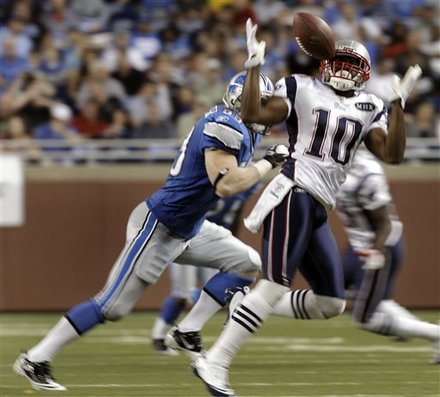
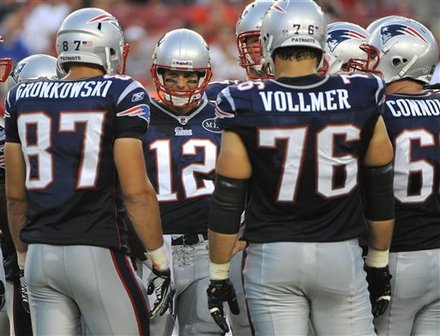
Pats fans have been putting a lot of stock in the first two pre-season games. Too much stock. So maybe we shouldn't overreact to this Detroit drubbing. However, there were some things I saw in this game that have me concerned:

-Protecting Brady: The offensive line didn't give Brady the time to make reads and find the open receiver. They didn't give him the space to step into his throws. He consistently underthrew the ball, even when pressure wasn't directly in front of him, perhaps as a result of the early pressure that was there. The Jets beat the Pats thanks in part to their pass rush. If Brady doesn't have the time and space to be Tom Brady, then the Patriots don't have the capability to go deep into the playoffs.

-Brady Himself: He didn't look sharp. Some of his incompletions were simply bad passes. He didn't even see the safety on his interception, which is uncharacteristic for him. As well as Detroit's pass-rushers played, Brady didn't take his trademark step in the right direction to avoid the pressure. He didn't seem to have the same pocket instincts we're accustomed to seeing him demonstrate.

-Playing Smart on Defense: How many times was the defense fooled Saturday night? It takes only one guy not doing their job, just one guy out of position in order for an entire defensive scheme to collapse. That happened several times, and the result was disastrous big plays.

-The Quality of the WRs: Wes Welker had a great game, catching 3 passes for 71 yards, and making a nice open-field tackle after an interception. And the Pats do have plenty of pass-catching options at WR, TE, and RB. But none of these guys are a deep threat, so the safeties can pretty much do what they want. And none of these guys require extra attention or double-coverage, so opposing defenses can feel free to send extra bodies to attack the QB.

I'm not in panic mode about this team, but they do have question marks, and they do need to improve in certain key areas. While it's true that some defensive players stayed home in Foxborough, if this team's success is reliant on old men like Haynesworth and Ellis, then it's going to be a very long season.

Pats host the Giants in their final pre-season game this Thursday.

Photo Credit:
AP Photo

College Football Preview: Non-BCS Contenders

Non-BCS teams have done really well lately, and the BCS countered that threat by absorbing them. Boise State tried to form a 7th power conference by moving to the Mountain West. Then TCU was added to the Big East (starting in 2012), the Pac-10 grabbed Utah, and BYU decided to go off on its own. Boise State is still the King of the BCS Busters, but that kingdom is shrinking.

BOISE STATE BRONCOS
BSU returns 7 starters to a unit that was #2 in scoring offense last year. QB and Heisman contender Kellen Moore leads them. Moore threw 35 TDs last year and has RB Doug Martin supporting him. Martin ran for 1,260 yards, averaging 6.0 per carry. The line returns 3 starters, but WR depth could be problematic.

The Broncos were also #2 in scoring defense and also return 7 starters on that side of the ball, 3 of which are on the D-line. They were 1st in the nation in sacks last year, and 2nd in tackles for a loss. They'll have to be strong up front because their secondary is a bit shaky.

They're overrated, frankly. The receivers and the secondary are weaknesses. Their special teams will be a liability with punting, kicking, and coverage problems. But their schedule is weak enough to win lots of games, and win some by large margins.

Key Games:
9/3 vs. Georgia (in Atlanta)
11/12 vs. TCU

Prediction:
11-1, MWC Champions, no BCS bid

TCU HORNED FROGS
TCU are 27-1 in their last 28 games, and although they bid farewell to lots of talent, they'll still be a legitimate team in 2011. The defense won't be as dominant as it was last year, but both LBs return (they use a 4-2-5 scheme), the line should be okay, but the secondary is untested.

They'll be vulnerable on offense. RB Ed Westley rushed for over 1,000 yards and 11 TDs as a sophomore. But the QB position will be a battle between sophomore Casey Pachal and freshman Matt Brown. The offensive line was a tremendous strength last year (only allowing 9 sacks), but only returns 1 starter.

The Frogs won't contend for a BCS berth, but they also won't lose many games. Their schedule isn't too imposing, and they only play 4 games outside of Texas.

Key Games:
10/28 vs. BYU (in Arlington)
11/12 @ Boise State

Prediction:
10-2, 2nd in MWC

NOTRE DAME FIGHTING IRISH
When a team goes 8-5, then returns 8 starters on each side of the ball, it normally generates some optimism. Add the name "Notre Dame" to the mix and it generates BCS buzz. But I've never been one to look at Notre Dame through green glasses.

There'll be a QB battle between Dayne Crist and Tommy Reese. There are question marks at RB and WR. On the plus side, the O-line returns almost completely intact.

The defense improves throughout 2010, which isn't saying much because they started the year allowing nearly 400 yards per game. There are two standouts in safety Harrison Smith, who picked off 7 passes last year, and linebacker Manti Te'o, who was part of 133 tackles.

The Irish are overrated by some. They're a Top 25 team, certainly, but aren't in the same league as most of the teams ahead of them. Thanks to a relatively easy schedule, though, they'll likely rise in the rankings.

Key Games:
9/17 vs. Michigan State
10/22 vs. USC
11/26 @ Stanford

Prediction:
9-3, no BCS bid

Tuesday, August 23, 2011

Why Miami Should Get the Death Penalty

The NCAA should kill Miami's football program, for at least a year. Miami should not be allowed to field a football team until its program has righted itself. More importantly, the Hurricanes need to be an example. If schools and programs don't check their players and coaches, the NCAA should let it be known that the consequences will be dire.

What might stop the NCAA from imposing the Death Penalty is exactly why the NCAA should impose it. The Death Penalty would punish the enitre ACC, it would punish the 12 teams Miami is scheduled to play in 2011. It punishes the 5 teams that Miami was going to visit this year. It punishes other sports teams at the school, and the university as a whole. It even punishes the economy of southern Florida. Everyone suffers, from the rich owner of hotels near Sun Life Stadium to the cleaning crew picking up trash after the game.

All these people are not responsible for what Miami's football program has done. But from now on, they'll be watching that program. And so will the interest groups surrounding other big football programs across the country.

Currently, the NCAA tries to monitor and discipline all the schools and programs in the country. That's a tough task. That's over 10,000 D-IA scholarship football players to keep tabs on, plus over 4,000 scholarship basketball players in D-I. And that's just the big money making programs. With so many athletes at so many schools, there has to be a more effective system of supervision and discipline.

It's all about pressure. If Miami receives the Death Penalty, there'll be pressure on the football team to clean up. That pressure will come from the school's trustees, from the AD, from local politicians. And there'll be pressure to keep the program clean once it's resurrected.

Going forward, the NCAA needs to apply pressure to the conferences. When USC was banned from postseason play for 2 years, the then Pac-10 suffered by losing potential bowl revenue. However, the Pac-10 did not have to relinquish the ill-gotten bowl money that USC was paid for their 2005 Rose Bowl appearance. It might seem unfair to punish the whole conference for USC's transgressions, but isn't it also unfair to reward the whole conference for USC's transgressions?

If the NCAA fines conferences for what happens with individual programs, the conferences will suddenly become excellent watchdogs. The schools running clean programs will lean on those running dirty ones to straighten themselves out. The conferences will investigate their programs. And instead of the NCAA monitoring 120 football teams, each conference can focus on the 8 or 10 or 12 programs under their supervision. That's just so much more efficient.

No conference has been directly punished for the violations of a program under their authority. Not surprisingly, I can't recall a single time that a conference reported a violation to the NCAA. The conferences aren't being watchdogs, because there's no pressure on them to do so.

If the NCAA holds conferences more accountable for what goes on underneath their noses, the NCAA also needs to grant the conferences more power. Conferences should be allowed to withhold TV and bowl game revenues from teams that are violating the rules. And once Athletic Directors are threatened with that possibility, they're going to be watching their coaches like a hawk.

Once the ADs scare the coaches, the coaches will realize that their job depends on the players they coach obeying the rules. The coaches will no longer wait until there's an accusation of foul play until they get off their asses and investigate. They'll actively take an interest in the financial lives of the players under their charge. And when a defensive end suddenly has a new Lexus, they'll take notice.

If the NCAA applies pressure to the conferences, the conferences will apply pressure to their schools. The schools will apply pressure to their programs. The programs will then apply pressure on the coaches, who will apply pressure on the players.

A few weeks ago, Ohio State's football program went unpunished for the memorabilia violations of its players, and the failure of the head coach to report it. The NCAA claimed that the school didn't have knowledge of what was going on, and therefore should not be punished. That's bullshit. In my opinion, Ohio State's football program failed to sufficiently monitor its athletes. Isn't it the job of the program to ensure compliance with NCAA regulations?

As long as the NCAA continues to use passive and soft disciplinary inactions like that, there will be widespread violations of NCAA rules. OSU football was excused for not knowing what was going on in their own program. I believe that OSU, and every other program in the country, needs to be held responsible for what goes on under their supervision. That's the only way to make them actively monitor their athletes' behavior.

There's always going to be sketchy boosters and agents giving money, cars, and girls to athletes. But if the NCAA overhauls its disciplinary system, and holds conferences responsible for their schools, schools accountable for their programs, programs responsible for their athletes. then epidemics of corruption like that at Miami won't occur. There will be single, isolated incidents. But there won't be systems of negligence and abuse that go on for years and involve dozens of athletes and coaches.

It's all about applying pressure, and making people scared that they might lose some money.

Why College Athletes Shouldn't Get Paid


In the maelstrom of the Miami scandal, I've been hearing many people suggest that it's time for the NCAA to allow schools to pay their athletes. After all, athletes in some sports generate huge amounts of revenue. And while they receive a free education, they're hardly living the high life on their weekly food stipends. It all seems so unfair.

And after what's been happening at Miami and other schools, it seems like a system of paying college athletes would be better than random boosters hooking them up with prostitutes and cars. Athletic salaries would put cash in the players' pockets, which would make them less likely to seek and/or accept illegal "gifts" from outside their institution.

There's a few problems, though. While big football and basketball programs do create revenue streams, that money isn't going to an owner or to a corporation. It's going to a school. And that school takes that money and reinvests it within itself. The money produced by a big football program can help pay a tennis programs' travelling expenses, it can refurbish a soccer field, pay for a new Zamboni. Or outside of athletics, it can pay for the renovation of science labs, for campus security, for more teachers, for better computers.

While it might seem fair to compensate the athletes that play for revenue producing teams, it's impossible to pay them and not deprive funding for another athletic program or part of the school.

I believe that athletics are an important part of education. Do you know what Division-I school fields the most intercollegiate varsity teams? Harvard. They field teams in 41 sports, so they must feel as though sports are important, and surely not just for the revenue. I doubt that the Ivy League's TV contract is particularly lucrative.

The lessons learned by playing sports can be invaluable in the real world. That's why I have no problem with state and Federal money helping to fund athletics (most big-time athletic programs are at state schools, and even the one's in private schools receive Federal assistance). That's also why I believe in Title IX. Because if schools are going to argue that athletics is an important part of education, then athletics cannot be just for the boys to benefit from.

If athletics are important to the educational experience, then sports and teams that generate revenue shouldn't receive special treatment, especially at the expense of the teams that don't generate revenue. It might seem unfair to not pay a Heisman winning QB that wins a national title, but it's unfair if that QB received a $50,000 paycheck and subsequently the baseball team couldn't afford bats and helmets so the team had to fold.

There are unfortunate stories of athletes hamstrung by NCAA rules, and forced to drop out because even with a full scholarship, they're restricted from earning enough money on their own to support a parent or a child. Perhaps the NCAA can make special exceptions in such cases, and allow an athlete to get a job and earn money. But just because there are a few of these sad stories, doesn't mean that the whole SEC should receive a paycheck. There are countless regular people who cannot finish or even start their college education because of financial constrictions. Why should someone be an exception just because they know how to read a blitz?

I struggle to sympathize with the plight of a college athlete. While some generate revenue, there is no greedy, mustachioed owner exploiting them, pocketing all that revenue for his own evil schemes. All schools are non-profit organizations. These athletes receive a free education, which can be worth upwards of $100,000. That means that when they graduate, they'll have no student loans to pay off. And there's no shortage of companies run by alumni who will give a middle linebacker a job in middle management.

I've heard it suggested that the NCAA should allow boosters to pay athletes. After all, isn't that sort of like tipping a bartender for doing a good job? And that would allow the school to continue to reinvest the money it makes off of its big teams. But this creates a massive conflict of interests. In the Miami scandal, some boosters offered bonuses for big hits against Miami's rivals. That impacts a game. What if a booster offers a reward for sacking the QB? That might encourage a defensive lineman to rush upfield Dwight Freeney style, instead of listening to his coach and defending the run. That impacts the game.

If boosters pay athletes, those athletes are beholden to them. In other words, the boosters become the bosses. The coach loses power, the school loses power, the boosters can even discipline players by cutting salary. Most disturbing of all is the idea of boosters having an impact on how the game is played. And how long would it be before a gambler started paying players to do things?

Compensating athletes would likely suppress the amount of illegal payments that are made by boosters. What else could suppress such payments is a comprehensive overhaul of the disciplinary hierarchy of college sports. The schools and conferences need to step up and take charge over monitoring their athletes. The NCAA cannot possibly keep tabs on 120 football programs, each with 85 scholarship athletes (that's over 10,000 players). I'll discuss the measures the NCAA, conferences, and schools need to take in my next post: Why Miami Should Receive the Death Penalty.

Friday, August 19, 2011

MLB NIXES NATS TRIBUTE


So the Washington Nationals wanted to play a game wearing hats representing the different branches of the United States' military. It was going to be a tribute to the helicopter crash in Afghanistan that killed 30 Americans, from three different branches (Navy, Air Force, and Army). But Major League Baseball said no.

The Nats were allowed to don the caps in batting practice, but were not permitted to do so in an actual game. When asked for an explanation, an MLB spokesman stated:

"We reserve hats for national tributes, where every club is wearing them on the same day. But we're happy to work with clubs on alternatives."

That cryptic, vague, almost Belichickian response really pisses me off, as does this whole story. The Nats wanted to do a nice tribute to all the men and women who commit themselves to serving our country. Think about how cool it would be to be a Marine, or a sailor, or a soldier, or an airman, and see a pro ballplayer wearing a Marine hat, or an Air Force hat.

It was just a minor little tribute, but Major League Baseball are being major league dinks for no good reason.

BRADY BUNCH BACK IN ACTION


I'm excited. I know it was a preseason game. I know it was against the Buccaneers. But it was exciting just seeing Tom Brady throwing passes in a game for the first time since that calamity against the Jets, especially with that lockout thing in between.

Brady was 11 for 19 for 118 yards, 2 TDs, and 0 picks. That's a 111.3 rating, by the way. He connected with Aaron Hernandez for a touchdown, and with Ochocinco. It was one of only two passes caught by the receiver formerly known as Johnson.

The Patriots amassed 200 yards on the grand, thanks mostly to Stevan Ridley's 84 yards on 14 carries. Ridley also caught 3 passes for 27. BJG Ellis ran for two scores.

If the Patriots can get a solid, reliable running game, it will help their passing so much. With tight-ends, and medium-route receivers like Welker, Branch, and Ochocino, it's a real luxury to be able to run the ball on 1st and 2nd downs, and create 2nd & 6, or 3rd & 2. That just opens the whole playbook for Brady.

The Patriots look good, but is that a surprise? This team won 14 games last year. We know they have the talent to make the playoffs and contend for a divisional title. So far, they look a little better than last year.

Maybe that's because we're anticipating guys like Woodhead, Hernandez, and Gronkowski to be good. They were surprises last year. They all have expectations now. Maybe because Ridley is having a good pre-season. Maybe because the young players are a year older and wiser. Maybe because the Pats added Ochocinco.

I haven't been this excited for a Patriots season to start since 2007.

Tuesday, August 16, 2011

PATS BETTER SAFE(TY) THAN SORRY?


The Patriots brought in a pair of safeties to work out for them Monday: Darren Sharper and Renaldo Hill. Sharper's 35 with health concerns. Although he's also a 5 time Pro-Bowler, who three times in his career hauled in 9 interceptions. He's a veteran free agent with 14 seasons under his belt and a Super Bowl ring on his finger.

Renaldo Hill doesn't bring the same pedigree. He's a veteran of 10 years, but he's been a bit of a journeyman, playing for Arizona, Oakland, Miami, and Denver. He's played in one career playoff game.

I'm not sold on Brandon Meriweather, and I don't think the Pats are either. He's got talent. But he wanders around too often. The Patriots' defense is based on all 11 guys doing their specific job. When that happens, the big plays (in theory) come. The Patriots don't like a guy going off on his own trying to force the big play to happen.

The Patriots' secondary also lacks experience. Chung looks sharp, but there isn't much leadership back there. Sharper, if healthy, can be effective in that role. Who knows how much he's be able to play, but at least with Sharper, you'd know what you'd get from him every down.

Monday, August 15, 2011

TEXAS A&M TO STAY IN BIG XII


The Big XII can breath a little easier, at least for now. While Texas A&M wanted to join the SEC, the amount of obstacles potentially blocking such a move were too many to overcome. A 13 team SEC would present scheduling difficulties, a 14 team begs the obvious question "who would be team #14?" Then there was a minefield of legal difficulties, most of which originated from the Lonestar State.

So for now, Texas A&M will remain in the 10 team Big XII.

But I think eventually, the Big XII will be torn asunder. The Pac-12 must still be considering a move to 16 teams. The SEC seems to be thinking about the same thing. Missouri wants to be part of the Big Ten. And who knows, the Big East might want to cherry-pick another team from the Central Time Zone.

In a few years, all the conferences are going to look different. Originally, the conferences were formed based on region and size of the school, as well as how much focus schools had on athletics. Now, conferences are being reshuffled based on TV dollars. That's why the Big East snatched up TCU, why BC is in the ACC, and why the centrally located Big XII is being ripped apart.

One thing I expect to happen shortly is a process of shedding inferior programs. Conferences will drop the schools that can't make big bowl games, don't make the NCAA basketball tournament, and are never on national television. The SEC will drop Mississippi State, The Big XII (if it still exists) may drop Iowa State. The Big Ten may send Northwestern packing.

The age of the super-conferences will soon be upon us.