I haven’t seen all of the Patriots’ pre-season opener against Washington as I had to work at a One Direction show Thursday night. Thank God for noise-cancelling headsets and ibuprofen. Having seen what I've seen in the Pats game so far, I’m also thankful for pre-season football, as it gives the team a chance to work on some flaws that must be improved upon before the games count.
The tackling was awful. Washington could run the ball at will and pick up significant chunks on the ground.
The offensive line didn't give Mallett much time to throw. They frequently got beat inside.
The pass coverage wasn't good. The Pats may have been without Revis, but the Redskins were playing without DeSean Jackson and Pierre Garcon. Apart from Malcolm Butler making a few plays in coverage, the passing defense was either beat straight-up, or penalized.
In general I don’t mind Brandon Browner and the Pats taking penalties in the passing game, but it depends on the situation. If it’s 3rd and 10, and Browner bumps his receiver 6 yards downfield and his guy wasn't even the target on the play or Browner could cover him well without the bump, and the penalty gives the opponent an automatic first down, then it’s a dumb penalty. If it's 20 yards downfield and you'll get burned for a big play if you don't bump, then a 5-yard flag is a good thing.
Situational penalties.
And as long as they're called both ways, and Edelman and Amendola are drawing penalties when someone breathes on them, then it is what it is. The Pats will get flags, the opponent will get flags. The NFL wants to redefine flag football.
Ryan Mallett isn't a starting QB in the NFL. He has an amazing arm. He's very tall. He has all the required physical qualities of a quarterback. But haven't we learned from watching Mr. Brady, that decision making and reading defenses and finding the open receiver is what separates the talented QBs from the great QBs?
These pre-season games are meant to give Mallett a chance to show he's a starter, which could potentially increase his trade value. I don't think he's shown that.
These games do not give Mallett a chance to show what he can do as a backup, as the guy who's called in when Brady gets banged up, and needs to keep the team afloat for a series, or a quarter, or a game. The backup the Pats want should be able to manage a game, make smart decisions, find the easy plays that are there, NEVER turn the ball over (which we've seen Mallett do in the past as a backup playing in a blowout game, which forced the Pats to but Brady back in).
Ryan Mallett hasn't passed the audition as an NFL starter. But we can't see in pre-season games like this, if he has the mental makeup to be a solid backup.
Jimmy Garappolo is not yet ready to be a #2 QB. He's still learning how to take snaps under center.
I'm not concerned about the tackling, or the defensive backs. I do have some worries about the offensive line protecting Brady because they struggled with it last year and Dante Scarnecchia is gone. And can we stop with the Ryan Mallett trade talk? I don't think the Pats would get much for him. He's not a starter, at least he hasn't shown that he is.
Photo Credit: Alex Brandon/AP
Friday, August 08, 2014
Monday, August 04, 2014
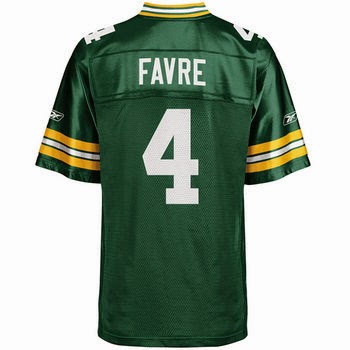
Packers should change their mind about retiring Brett Favre's number, then announce they'll retire it, then not retire it
The Green Bay Packers will retire #4 in honor of overrated dick-pic sender Brett Favre. The QB who helped Desmond Howard win a Super Bowl and was praised throughout his career as if he had won multiple rings, will be honored by the team that he jerked around for years.
Brett Favre has the distinction of throwing more bad passes than any other player in NFL history.
He's still a Hall of Famer, though. In part because the Football HOF inducts about 33 guys a year. So I get the number retiring. Number retiring is difficult in football for some positions. Quarterback isn't one of them. You have 19 digits to choose from and only 3 guys need them. And no other player would dare wear #4 in Green Bay again, unless they wanted to take a serious run at all of Favre's records. Only an even more gun-slingin', river-boat-gamblin' risk taker could dare hope to throw as many picks as Favre.
The Packers should use Favre's number retirement as a chance to exact some revenge. Announce that #4 will be retired. Then a few weeks prior to the ceremony announce that it won't be retired. Wait another year, with other numbers waiting in the wings to step up and be honored, then announce retirement again. Then announce that it won't be retired.
I just want to see Brett Favre throw a hissy fit. Because that's one throw of his that probably won't be intercepted.
And years from now, how hard is John Madden going to try to pass away on the 4th of the month, or in April, just so the #4 is on his tombstone?
Brett Favre has the distinction of throwing more bad passes than any other player in NFL history.
He's still a Hall of Famer, though. In part because the Football HOF inducts about 33 guys a year. So I get the number retiring. Number retiring is difficult in football for some positions. Quarterback isn't one of them. You have 19 digits to choose from and only 3 guys need them. And no other player would dare wear #4 in Green Bay again, unless they wanted to take a serious run at all of Favre's records. Only an even more gun-slingin', river-boat-gamblin' risk taker could dare hope to throw as many picks as Favre.
The Packers should use Favre's number retirement as a chance to exact some revenge. Announce that #4 will be retired. Then a few weeks prior to the ceremony announce that it won't be retired. Wait another year, with other numbers waiting in the wings to step up and be honored, then announce retirement again. Then announce that it won't be retired.
I just want to see Brett Favre throw a hissy fit. Because that's one throw of his that probably won't be intercepted.
And years from now, how hard is John Madden going to try to pass away on the 4th of the month, or in April, just so the #4 is on his tombstone?
Clay Buchholz doesn't belong in the Majors
He's painfully slow. He doesn't throw enough strikes. When he does, they're meatballs right down the middle. He has no confidence. He's injury prone. He's fragile both physically and mentally. He'll cost $12 million in 2015. He turns 30 in a few days. There's no reason to want to see Clay Buchholz in a Red Sox uniform next spring.
Sunday night was another patented Buchholz turd burger. Twice he was given a 3 run lead. Twice he blew that lead. He walked 5, his third straight start with 4+ walks. Only 53.5% of his pitches were strikes. He threw first-pitch strikes to 14 batters, and first-pitch balls to 13.
The Red Sox are 6-11 (.353) in Buchholz starts this year, and 43-51 (.457) in other games. If the Sox were in a playoff race, Buchholz would be the biggest reason they wouldn't win it.
He sucks.
And if he pitches like this in April 2015, he doesn't deserve to wear a Boston Red Sox uniform. He can be diagnosed with another phantom injury running to 1st base and be sent to Pawtucket to rehab for a few weeks. Or be traded. Or designated for assignment. Whatever the case, if he continues to pitch like this, he simply is not a Major League starter.
Maybe a move to the bullpen is in his future. I don't know how he'd respond to the different type of strain relievers go through. But as a reliever, he'd only need two effective pitches, not three.
There is a point at which you give up on Buchholz. And it's on the horizon. The next few weeks are meaningless in terms of wins and losses, so the Sox can let him inflate his WHIP and ERA with every start. The 30 seconds between pitches probably extend alcohol shutdown at Fenway a few minutes, increasing beer sales.
But he is essentially pitching to keep his job. If these struggles extend into next year, when I'm told the Red Sox will attempt to be competitive, then he must go.
Photo Credit: Matt Stone - Boston Herald
Sunday night was another patented Buchholz turd burger. Twice he was given a 3 run lead. Twice he blew that lead. He walked 5, his third straight start with 4+ walks. Only 53.5% of his pitches were strikes. He threw first-pitch strikes to 14 batters, and first-pitch balls to 13.
The Red Sox are 6-11 (.353) in Buchholz starts this year, and 43-51 (.457) in other games. If the Sox were in a playoff race, Buchholz would be the biggest reason they wouldn't win it.
He sucks.
And if he pitches like this in April 2015, he doesn't deserve to wear a Boston Red Sox uniform. He can be diagnosed with another phantom injury running to 1st base and be sent to Pawtucket to rehab for a few weeks. Or be traded. Or designated for assignment. Whatever the case, if he continues to pitch like this, he simply is not a Major League starter.
Maybe a move to the bullpen is in his future. I don't know how he'd respond to the different type of strain relievers go through. But as a reliever, he'd only need two effective pitches, not three.
There is a point at which you give up on Buchholz. And it's on the horizon. The next few weeks are meaningless in terms of wins and losses, so the Sox can let him inflate his WHIP and ERA with every start. The 30 seconds between pitches probably extend alcohol shutdown at Fenway a few minutes, increasing beer sales.
But he is essentially pitching to keep his job. If these struggles extend into next year, when I'm told the Red Sox will attempt to be competitive, then he must go.
Photo Credit: Matt Stone - Boston Herald
Friday, August 01, 2014
John Lackey wanted to leave the Red Sox
Two years ago could you have imagined that John Lackey would be the one dumping the Red Sox, and not vice versa?
Lackey made it clear that if the Red Sox tried to exercise their $500,000 option on him for 2015, there was a strong likelihood that he'd retire. But that option nevertheless increased his trade value. At the very least the option gave leverage to the Sox or any other team negotiating a contract extension. They could offer less than market value to Lackey, whose choices would be to accept a few million to pitch or retire once the $500k option was exercised.
Immediately after Lackey was traded to St. Louis, Ken Rosenthal announced that Lackey informed the Cardinals he would honor the $500,000 option, and not retire. Had Lackey told the Red Sox that he'd be willing to play for $500,000 in 2015, there's no way the Sox would have traded him. In essence, Lackey engineered this trade.
Remember when all of us wanted Lackey to be included with Beckett and Crawford in the Great Purge of 2012? Then last year we became Lackey fans as he helped the team win a World Series. And now he is the one who orchestrated his departure.
The Cards and Lackey might come to terms on a new contract extension anyway. But isn't it odd that this option was a point of contention for Lackey here in Boston, then he gets traded and it's no longer an issue? He did not want to stay here.
Lackey had enough of the Red Sox. The way the non-negotiations went between Jon Lester and the front office probably had a lot to do with that. Once the Sox started shopping Lester, Lackey wanted out. He gave the Red Sox an incentive to trade him, with the threat of future uncertainty if they didn't. He also kept his trade value up with his performance on the field, and by never threatening to retire if a team besides the Red Sox wanted to exercise his $500k option.
If the Red Sox were the Titanic, sinking slowly into the North Atlantic, John Lackey got himself a spot on a lifeboat by threatening to blow up half the ship if he wasn't allowed off.
And here's the kicker. The Sox included that $500,000 option when they signed him as a way to mitigate the risk of his elbow issues. The idea was that he might miss a long time due to injury (which he did), costing the team lots of money (which he did), but that the team would recoup the loss with a year of almost free service.
But it's the Cardinals who look to benefit from that nearly free year that the Red Sox paid for. The Sox bought the the insurance policy and made all the payments, the Cardinals are cashing it in. And that's because Lackey wanted to leave.
Photo Credit: Barry Chin/Boston Globe
Lackey made it clear that if the Red Sox tried to exercise their $500,000 option on him for 2015, there was a strong likelihood that he'd retire. But that option nevertheless increased his trade value. At the very least the option gave leverage to the Sox or any other team negotiating a contract extension. They could offer less than market value to Lackey, whose choices would be to accept a few million to pitch or retire once the $500k option was exercised.
Immediately after Lackey was traded to St. Louis, Ken Rosenthal announced that Lackey informed the Cardinals he would honor the $500,000 option, and not retire. Had Lackey told the Red Sox that he'd be willing to play for $500,000 in 2015, there's no way the Sox would have traded him. In essence, Lackey engineered this trade.
Remember when all of us wanted Lackey to be included with Beckett and Crawford in the Great Purge of 2012? Then last year we became Lackey fans as he helped the team win a World Series. And now he is the one who orchestrated his departure.
The Cards and Lackey might come to terms on a new contract extension anyway. But isn't it odd that this option was a point of contention for Lackey here in Boston, then he gets traded and it's no longer an issue? He did not want to stay here.
Lackey had enough of the Red Sox. The way the non-negotiations went between Jon Lester and the front office probably had a lot to do with that. Once the Sox started shopping Lester, Lackey wanted out. He gave the Red Sox an incentive to trade him, with the threat of future uncertainty if they didn't. He also kept his trade value up with his performance on the field, and by never threatening to retire if a team besides the Red Sox wanted to exercise his $500k option.
If the Red Sox were the Titanic, sinking slowly into the North Atlantic, John Lackey got himself a spot on a lifeboat by threatening to blow up half the ship if he wasn't allowed off.
And here's the kicker. The Sox included that $500,000 option when they signed him as a way to mitigate the risk of his elbow issues. The idea was that he might miss a long time due to injury (which he did), costing the team lots of money (which he did), but that the team would recoup the loss with a year of almost free service.
But it's the Cardinals who look to benefit from that nearly free year that the Red Sox paid for. The Sox bought the the insurance policy and made all the payments, the Cardinals are cashing it in. And that's because Lackey wanted to leave.
Photo Credit: Barry Chin/Boston Globe
If Stephen Drew is worth a utility infielder, why didn't the Red Sox just sign a utility infielder in the first place?
With Stephen Drew's departure in exchange for Kelly Johnson, it's time to look at how the Red Sox managed and mismanaged the short-stop situation in 2014.
The Sox should have anticipated defensive difficulties at short. Signing a defensive backup would have been a perfectly normal and prudent thing to do. That backup could have been used in the late innings of close games, especially games the Sox were leading.
I didn't mind when the Red Sox removed Xander Bogaerts from short-stop. He couldn't field his position, and you can't afford to have poor defense at short, especially when the offense is struggling to score runs. I don't care what the move might have done to Bogaerts' development or self-esteem. The Major League level is not the place to nurture prospects and worry about their confidence. It's the place to win games or lose them. Bogaerts' defense was not helping them win.
However, when Bogaerts' defense compelled the Sox to act, signing Drew was a completely wrong decision, utterly incorrect in every single way. Moving Bogaerts to third was also unwise. But he was hitting well when few other Sox batters were, and the Sox had no third baseman. In other words, because the rest of the team was sucking at the plate, and another young infielder (Middlebrooks) was having difficulties, Bogaerts stayed in Boston. But was moved to third. Drew was signed to play short.
If the Sox felt that Bogaerts' defensive issues were so critical that they were worth $10 million to address, they should have sent Bogaerts to Pawtucket to work on it, not sign an overpaid replacement and shift Bogaerts to an unfamiliar position he'd have to learn on the fly at the Major League level.
The Sox tried to play it both ways, removing Bogaerts' glove from short-stop, but keeping his bat in the Major League lineup. If only they could have sent his glove to Pawtucket and kept his bat in Boston.
It didn't work. Why would anyone think it would?
What the Sox truly needed at that time was flexibility in their infield. Again, a Kelly Johnson type of utility infielder could have been acquired as a defensive replacement for Bogaerts, and perhaps to play in Boston for a few weeks while Bogaerts focused on defense in Pawtucket. The solution was something cheap and flexible, like I like my women.
However, Stephen Drew did not bring flexibility, he brought abject inflexibility. Because he was going to play at short-stop. Period. And he was going to play every day because you don't spend $10 million on backups. Period. Drew even seemed to have a negotiated limit for how long he'd stay in Pawtucket getting ready to play in Boston.
And of course, Drew's bat was nonexistent, and Bogaerts' hitting went down the tubes as he shifted to third. Bogaerts' defense was still bad over there. The fiasco cost millions, defense at short improved but defense at third was degraded, and offensive production decreased.
Now Drew is gone. Again. Notice the increased flexibility in his departure. The Sox can make choices with what they want to do in the infield. Bogaerts will be back at short again. However I don't think this experience has helped his development. It certainly hasn't helped the Red Sox win games in 2014.
Stephen Drew is evidently worth a utility infielder on the trade market, who will make $3 million in 2014, instead of the prorated portion of $14 million that Drew was signed for. So why didn't the Sox sign a utility guy to begin with? Why didn't they pick up a defensive specialist at short? Why didn't they either keep Bogaerts where he was, or send him to Pawtucket to work on his problems without it hurting the team in Boston?
Stephen Drew wore a 7 on his jersey here. I think that should have been modified slightly to be a giant question mark.
Photo Credit: John Tlumacki/Boston Globe
The Sox should have anticipated defensive difficulties at short. Signing a defensive backup would have been a perfectly normal and prudent thing to do. That backup could have been used in the late innings of close games, especially games the Sox were leading.
I didn't mind when the Red Sox removed Xander Bogaerts from short-stop. He couldn't field his position, and you can't afford to have poor defense at short, especially when the offense is struggling to score runs. I don't care what the move might have done to Bogaerts' development or self-esteem. The Major League level is not the place to nurture prospects and worry about their confidence. It's the place to win games or lose them. Bogaerts' defense was not helping them win.
However, when Bogaerts' defense compelled the Sox to act, signing Drew was a completely wrong decision, utterly incorrect in every single way. Moving Bogaerts to third was also unwise. But he was hitting well when few other Sox batters were, and the Sox had no third baseman. In other words, because the rest of the team was sucking at the plate, and another young infielder (Middlebrooks) was having difficulties, Bogaerts stayed in Boston. But was moved to third. Drew was signed to play short.
If the Sox felt that Bogaerts' defensive issues were so critical that they were worth $10 million to address, they should have sent Bogaerts to Pawtucket to work on it, not sign an overpaid replacement and shift Bogaerts to an unfamiliar position he'd have to learn on the fly at the Major League level.
The Sox tried to play it both ways, removing Bogaerts' glove from short-stop, but keeping his bat in the Major League lineup. If only they could have sent his glove to Pawtucket and kept his bat in Boston.
It didn't work. Why would anyone think it would?
What the Sox truly needed at that time was flexibility in their infield. Again, a Kelly Johnson type of utility infielder could have been acquired as a defensive replacement for Bogaerts, and perhaps to play in Boston for a few weeks while Bogaerts focused on defense in Pawtucket. The solution was something cheap and flexible, like I like my women.
However, Stephen Drew did not bring flexibility, he brought abject inflexibility. Because he was going to play at short-stop. Period. And he was going to play every day because you don't spend $10 million on backups. Period. Drew even seemed to have a negotiated limit for how long he'd stay in Pawtucket getting ready to play in Boston.
And of course, Drew's bat was nonexistent, and Bogaerts' hitting went down the tubes as he shifted to third. Bogaerts' defense was still bad over there. The fiasco cost millions, defense at short improved but defense at third was degraded, and offensive production decreased.
Now Drew is gone. Again. Notice the increased flexibility in his departure. The Sox can make choices with what they want to do in the infield. Bogaerts will be back at short again. However I don't think this experience has helped his development. It certainly hasn't helped the Red Sox win games in 2014.
Stephen Drew is evidently worth a utility infielder on the trade market, who will make $3 million in 2014, instead of the prorated portion of $14 million that Drew was signed for. So why didn't the Sox sign a utility guy to begin with? Why didn't they pick up a defensive specialist at short? Why didn't they either keep Bogaerts where he was, or send him to Pawtucket to work on his problems without it hurting the team in Boston?
Stephen Drew wore a 7 on his jersey here. I think that should have been modified slightly to be a giant question mark.
Photo Credit: John Tlumacki/Boston Globe
The Red Sox didn't even try to keep Jon Lester here
I'd rather have Yoenis Cespedes now than next to nothing when Jon Lester walks as a free agent. That's not why I'm disappointed/enraged at the Red Sox today. I'm mad because I'd much much much MUCH rather have Jon Lester over Yoenis Cespedes. There's essentially nobody the Sox could have gotten in exchange for Lester that would have left me content. Unfortunately the Sox made no legitimate effort to keep Lester here. The fact that he's gone, and that we'll never know how much of a hometown discount he would have accepted to stay, leaves me shaking my head.
How could the Red Sox do this to themselves?
The Sox traded a guy who had recently become a bona fide Ace, and who had also grown into a leader, for a Homerun Derby winner. That's like trading Kevin Durant for the winner of the slam dunk contest. And this happened because the Sox hardly tried to keep their Ace. That lack of effort is the most irritating aspect of what unfolded at the trade deadline.
The $70 million offer for 4 years offer was an insult, not a starting point. You can't negotiate with insults. Watch Shark Tank and see how the potential investors react when someone makes an absurd demand. Or go to a car dealership and offer to buy a brand new Mercedes for half the sticker price. The dealer won't make a counter offer, they'll just move on, because it's clear you're not serious.
I've heard some people question Lester's camp for not making a counter-offer, but how do you counter a joke? How can you negotiate with someone who thinks that you're worth slightly more money a year than Clay Buchholz was? How can you negotiate with someone who is clearly terrified of long-term commitment, which I'm sure is something Lester wants? Lester has been underpaid by the Sox for years, this is his chance to cash in, and the Sox were too cheap.
Or were they? Were they cheap or did they want to make a token offer they knew would get rejected? They've done similar things before.
These cloak and dagger, deceptive, disingenuous tactics are what we've come to expect from the Red Sox front office. And don't exclude Ben Cherington from these mind games. He's King John's pawn, he's Lord Lucchino's foot soldier. He's happy to be their puppet, or to stay out of baseball decisions when his masters get involved.
The Red Sox have no clue what it will cost to sign Lester in the off-season. They don't even know what his hometown discount rate might have been. That's the proof that their "negotiations" with him were not negotiations. If you don't at least come away with knowing what the other party wants, then you haven't negotiated.
If Lester signs a massive deal somewhere else, let's say $200 million for 7 years, I won't praise the Red Sox for knowing the price would be too high. They don't know anything. They made a crap offer that pissed off their Ace, then failed to immediately make a legit offer, then traded their best player from the 2013 World Series run. They sent a pitcher with 110 career wins, a 3-0 record in the World Series, and 2 rings to Oakland in exchange for a guy with 66 career homeruns and 2 HR Derby trophies.
If this had been the end of a hard fought negotiation, then it would be easier to accept. It's not, though.
5 years and $100 million, perhaps with a vesting option for a 6th year. Maybe 5 years at $110 million. That might have been enough to keep Lester. We simply do not know, though. We'll never know. Which is why this whole situation pisses me off so much.
Photo Credit: Barry Chin/Boston Globe
How could the Red Sox do this to themselves?
The Sox traded a guy who had recently become a bona fide Ace, and who had also grown into a leader, for a Homerun Derby winner. That's like trading Kevin Durant for the winner of the slam dunk contest. And this happened because the Sox hardly tried to keep their Ace. That lack of effort is the most irritating aspect of what unfolded at the trade deadline.
The $70 million offer for 4 years offer was an insult, not a starting point. You can't negotiate with insults. Watch Shark Tank and see how the potential investors react when someone makes an absurd demand. Or go to a car dealership and offer to buy a brand new Mercedes for half the sticker price. The dealer won't make a counter offer, they'll just move on, because it's clear you're not serious.
I've heard some people question Lester's camp for not making a counter-offer, but how do you counter a joke? How can you negotiate with someone who thinks that you're worth slightly more money a year than Clay Buchholz was? How can you negotiate with someone who is clearly terrified of long-term commitment, which I'm sure is something Lester wants? Lester has been underpaid by the Sox for years, this is his chance to cash in, and the Sox were too cheap.
Or were they? Were they cheap or did they want to make a token offer they knew would get rejected? They've done similar things before.
These cloak and dagger, deceptive, disingenuous tactics are what we've come to expect from the Red Sox front office. And don't exclude Ben Cherington from these mind games. He's King John's pawn, he's Lord Lucchino's foot soldier. He's happy to be their puppet, or to stay out of baseball decisions when his masters get involved.
The Red Sox have no clue what it will cost to sign Lester in the off-season. They don't even know what his hometown discount rate might have been. That's the proof that their "negotiations" with him were not negotiations. If you don't at least come away with knowing what the other party wants, then you haven't negotiated.
If Lester signs a massive deal somewhere else, let's say $200 million for 7 years, I won't praise the Red Sox for knowing the price would be too high. They don't know anything. They made a crap offer that pissed off their Ace, then failed to immediately make a legit offer, then traded their best player from the 2013 World Series run. They sent a pitcher with 110 career wins, a 3-0 record in the World Series, and 2 rings to Oakland in exchange for a guy with 66 career homeruns and 2 HR Derby trophies.
If this had been the end of a hard fought negotiation, then it would be easier to accept. It's not, though.
5 years and $100 million, perhaps with a vesting option for a 6th year. Maybe 5 years at $110 million. That might have been enough to keep Lester. We simply do not know, though. We'll never know. Which is why this whole situation pisses me off so much.
Photo Credit: Barry Chin/Boston Globe
Thursday, July 31, 2014
I'm not a fan of Yoenis Cespedes
The Red Sox traded Jon Lester along with Jonny Gomes to Oakland for an outfielder with decent power who doesn't get on base as often as you'd like.
That's Yoenis Cespedes. Cespedes will also be costing the Sox $10.5 million in 2015, and is scheduled to hit free agency after that.
He's 28, but he's also Cuban, so let's call it 28ish.
He hit 26 homeruns last year and 23 the year before. He's on pace to hit a similar amount this year. He'll probably be more of a power hitter in Fenway's friendly confines. Nevertheless, his career OBP is .318, and that just sucks for someone you want to hit in the middle of the lineup. He doesn't walk much, he does strike out a lot, he doesn't see lots of pitches.
He's an improvement, don't get me wrong. He's a solid player, he's better than anything the Sox have in the outfield today. But he's what you get for your Ace? For the guy who was your playoffs MVP last year? For a guy who won games for you this year even with some of the worst run support in baseball?
The Red Sox didn't sign Lester because they were worried about the future. So the future is this 20-30 HR outfielder who strikes out a lot and struggles to get on base 30% of the time? That's the future the Sox intend to build?
Photo Credit: Getty Images/Ezra Shaw
That's Yoenis Cespedes. Cespedes will also be costing the Sox $10.5 million in 2015, and is scheduled to hit free agency after that.
He's 28, but he's also Cuban, so let's call it 28ish.
He hit 26 homeruns last year and 23 the year before. He's on pace to hit a similar amount this year. He'll probably be more of a power hitter in Fenway's friendly confines. Nevertheless, his career OBP is .318, and that just sucks for someone you want to hit in the middle of the lineup. He doesn't walk much, he does strike out a lot, he doesn't see lots of pitches.
He's an improvement, don't get me wrong. He's a solid player, he's better than anything the Sox have in the outfield today. But he's what you get for your Ace? For the guy who was your playoffs MVP last year? For a guy who won games for you this year even with some of the worst run support in baseball?
The Red Sox didn't sign Lester because they were worried about the future. So the future is this 20-30 HR outfielder who strikes out a lot and struggles to get on base 30% of the time? That's the future the Sox intend to build?
Photo Credit: Getty Images/Ezra Shaw
Wednesday, July 30, 2014
Red Sox should trade Jonny Gomes for Jonny Gomes
Four times in Major League history has a player been traded for himself, as the "player to be named later" in a deal. The most recent was in 2005 when the Blue Jays sent John McDonald to Detroit for a player to be named later, and McDonald was returned to Toronto as that player.
The Red Sox should do this with Jonny Gomes. Because Jonny Gomes saves franchises. He comes to town teams get better. He is to struggling ballclubs what John Taffer is to struggling bars. I discovered this history of teams improving once Gomes arrives through legitimate research. I'm surprised Gomes doesn't talk about it.
The Red Sox could send Gomes to a team looking for an heroic clubhouse presence, along with "cash considerations" (nudge nudge, wink wink) for a player to be named later. A few days after, that team could send Gomes back to the Sox as the named player. The Red Sox are almost guaranteed to resurrect their season, the other team gets a few bucks (and probably wins every game Gomes sits on the bench for them, deceiving the other team by pretending to get ready to pinch hit), everyone wins.
There's plenty of baseball left, and a few weeks ago we saw this team win a few games in a row and get right back into being almost close to the race. Jonny Gomes is the infusion of energy that this team needs to get over the hump and win 95% of its remaining games, with or without Jon Lester.
Because phonebooth.
Photo Credit Jeff Roberson/AP
The Red Sox should do this with Jonny Gomes. Because Jonny Gomes saves franchises. He comes to town teams get better. He is to struggling ballclubs what John Taffer is to struggling bars. I discovered this history of teams improving once Gomes arrives through legitimate research. I'm surprised Gomes doesn't talk about it.
The Red Sox could send Gomes to a team looking for an heroic clubhouse presence, along with "cash considerations" (nudge nudge, wink wink) for a player to be named later. A few days after, that team could send Gomes back to the Sox as the named player. The Red Sox are almost guaranteed to resurrect their season, the other team gets a few bucks (and probably wins every game Gomes sits on the bench for them, deceiving the other team by pretending to get ready to pinch hit), everyone wins.
There's plenty of baseball left, and a few weeks ago we saw this team win a few games in a row and get right back into being almost close to the race. Jonny Gomes is the infusion of energy that this team needs to get over the hump and win 95% of its remaining games, with or without Jon Lester.
Because phonebooth.
Photo Credit Jeff Roberson/AP
Subscribe to:
Comments (Atom)